4 Quick And Easy Ways To Rodent Proof Your Home

Mice and rats move indoors looking for food, water, and shelter, and once they’re in, they’re hard to get out. The best defense is rodent-proofing: closing the openings they use to get inside and taking away what draws them in.
Wild mice and rats are anything but clean. The CDC notes that rodents can spread diseases such as hantavirus, leptospirosis, and salmonellosis, along with others carried by the ticks, mites, and fleas they bring with them.
Rodents are dumpster divers and sewer pipe runners. They’re as comfortable in a trash bin as they are in your pantry. They also have to chew constantly to wear down their teeth, which means chewed wood, chewed food packaging, holes in your walls, and damaged wiring that can become a fire risk.
Here’s how to keep them out.
How Mice and Rats Get Inside
Rodents don’t need much room. A mouse can squeeze through a gap about 1/4 inch wide, smaller than a dime. A rat can fit through a gap about 1/2 inch wide. If a rodent can fit its head through an opening, it can usually fit its body.
They also don’t stop at the gaps they find. Mice and rats gnaw on wood, vinyl, and other soft materials to widen small openings. Rats are strong climbers, too, and can use pipes, wires, trees, and downspouts to reach your roofline.
Where to Check Around Your Home
Grab a flashlight and walk the outside of your home, then check the garage, basement, and attic. Look for rotted wood, cracks, and holes in these spots:
- Cracks in the foundation and around basement windows
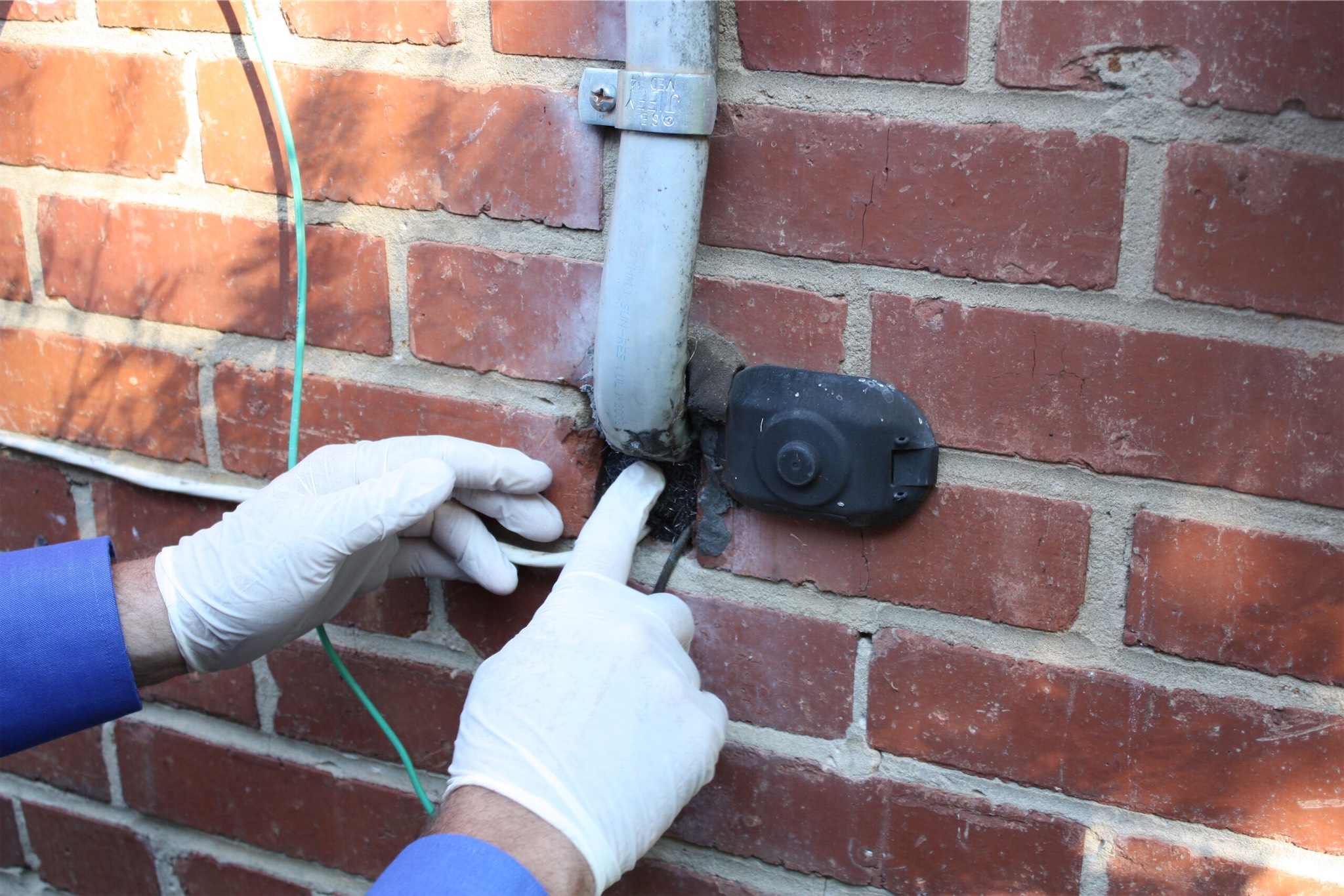
- Gaps where pipes, cables, and utility lines enter the house
- Openings around air conditioning line sets
- Dryer vents, attic vents, and crawlspace vents
- Worn or damaged garage door seals
- Gaps under exterior doors
- Gaps along the roofline, soffits, and fascia
- Openings behind appliances and under sinks, where pipes pass through walls
Materials That Keep Rodents Out
The right material matters as much as finding the gap. Rodents chew through soft materials, so use ones they can’t get through.
Materials that work:
- Copper mesh: Pack it into small and medium gaps around pipes and utility lines. It holds up better than steel wool, which rusts.
- Hardware cloth or metal screen: Use 1/4-inch hardware cloth to cover vents and larger openings.
- Sheet metal: Cover gnawed or damaged areas around doors, siding, and the roofline.
- Concrete or mortar: Fill cracks in the foundation and gaps around basement windows.
- Door sweeps and garage door seals: Choose metal-backed or rodent-resistant versions for exterior doors and the garage.
Materials that don’t hold up on their own: Expanding foam, caulk, plastic, wood, and rubber weatherstripping. Rodents can chew through all of them. If you use foam or caulk, pack copper mesh into the gap first, then seal over it to hold the mesh in place.
Don’t plug downspouts. Blocking them traps water against your foundation. Instead, cover downspout openings with a metal screen that still lets water drain.
How to Mouse-Proof Your Home
Mice tend to nest indoors, close to food. Once they’re drawn to the warmth of a home in the fall, they look for a steady food and water source. Taking those away makes your home far less inviting.
Store food in sealed, hard plastic, glass, or metal containers. Mice can’t smell food through them, and they can’t chew into them.

- Keep all trash in containers with tight-fitting lids.
- Put pet food down only at mealtime, and store the bag in a sealed container.
- Don’t leave food or crumbs out on counters overnight.
- Fix leaky pipes and faucets, especially under sinks.
- Swap cardboard boxes in the basement, garage, and attic for plastic bins with lids. Mice shred cardboard for nesting.
- Seal gaps around pipes under sinks and behind the stove, refrigerator, and washer.
How to Rat-Proof Your Home
Rats often nest outside and travel into your home for food. Rat-proofing focuses on the outside of the house and the areas right around it.
- Keep outdoor trash and recycling bins closed with tight lids.
- Bring pet food bowls inside, and clean up spilled bird seed under feeders.
- Keep compost in a closed bin.
- Store firewood off the ground and away from the side of the house.
- Watch for burrows along the foundation, under decks, and beside sheds or slabs. Burrows are a sign of an active rat population and a good reason to call a professional.
Bushes, shrubs, ivy, and pachysandra all give rodents ground cover to travel through and hide their activity.

Cut plants back from your foundation walls before winter so rodents don’t feel at home next to your house. Trim tree branches so they don’t touch or hang over the roof, which keeps rats from reaching your roofline.
When to Rodent-Proof Your Home
Early fall is the best time to seal up. As temperatures drop, rodents are drawn to the warmth leaking out of homes, and closing gaps before then keeps them from settling in for the winter.
A second check in late winter or early spring helps too. That’s when you can spot new gnaw marks or gaps from the season. Keep in mind that sealing up won’t make rodents that are already inside leave. Mice that moved in over the winter usually stay as long as they have food and shelter.
When to Call a Pest Professional
Some entry points are hard to find or reach, like gaps along the roofline, inside wall voids, or behind siding. If you’re still seeing droppings, gnaw marks, or hearing scratching in the walls at night after sealing up, rodents are likely still getting in or already living inside.
A pest professional can inspect your home, find the entry points you missed, and seal them with professional-grade materials. American Pest’s technicians build a plan for rodent control around your home, using EPA-approved products applied by certified professionals.
Rodents are looking for food and shelter. Take those away, close the gaps they use to get in, and your home becomes much harder for them to move into.
Request Your Pest Control Estimate
Related Posts
Contact Us Today!
Do you need an estimate for service or have questions about pests? We’d love to hear from you!
Fill out the form and receive feedback today. For immediate service, please give us a call!