How to Recognize The Signs Of Ant Infestation
The Big Takeaways:
- Ant infestations often start with small signs like visible trails, stray worker ants, or debris from nesting activity, and these early indicators help you act before the colony grows.
- Different ant species leave different clues, and recognizing whether you are dealing with carpenter ants, odorous house ants, or pavement ants helps determine the right response.
- Understanding how ants enter and live inside homes gives you a better chance of preventing infestations, especially when combined with professional treatment and long-term prevention planning.
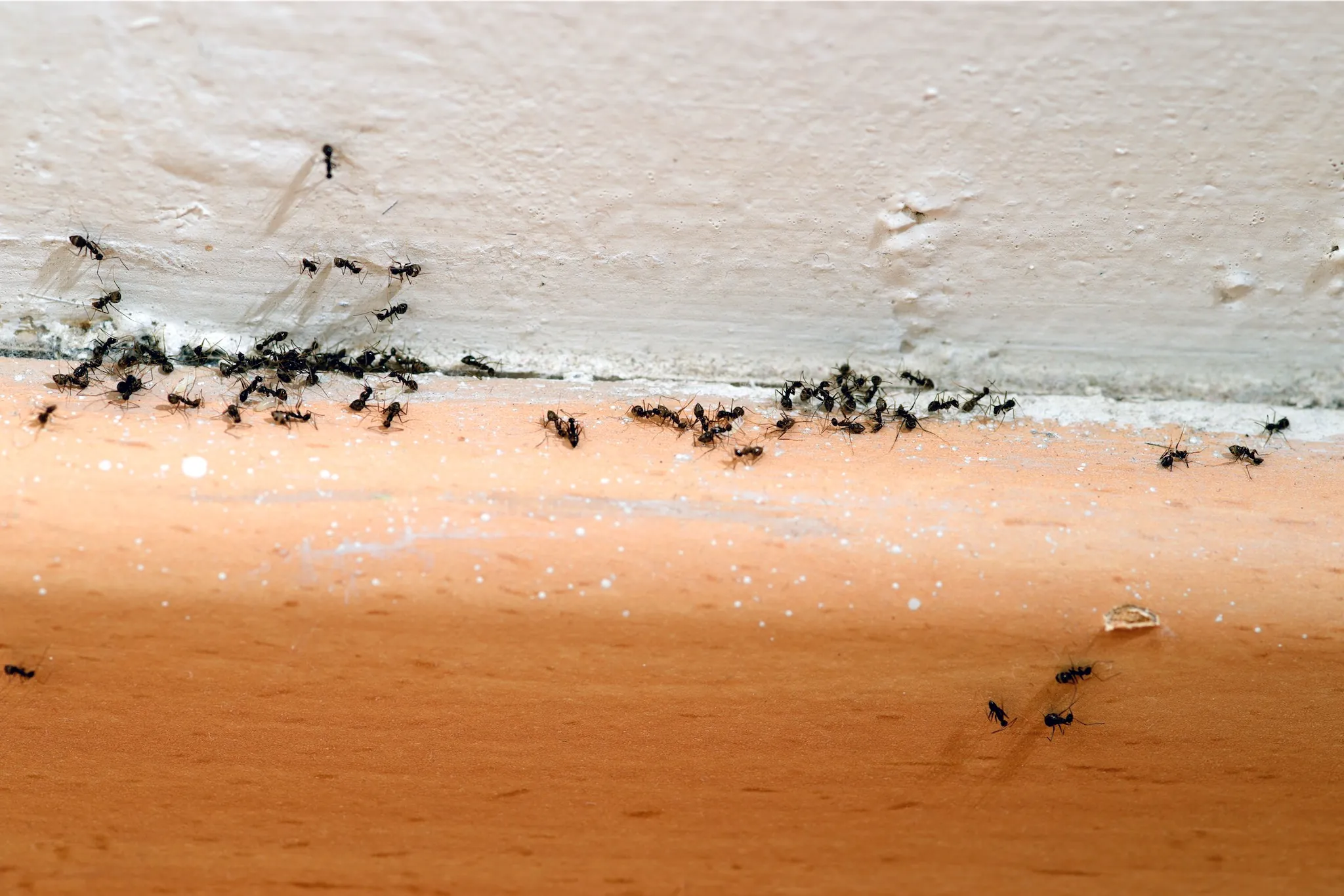
If you have a few ants crawling around your kitchen or pantry, it may be no big deal. Nesting ants that enter your house to forage for food aren’t too much of a problem. They can crawl up vertical surfaces and get in through some pretty tiny holes.
But if those ants you see in the kitchen came from a colony inside your walls, that could be bad, especially if they are carpenter ants.
Are These Ants or Termites?
Before you are trying to recognize if there’s an ant infestation going on in your home, make sure you’re not dealing with something else, like termites.
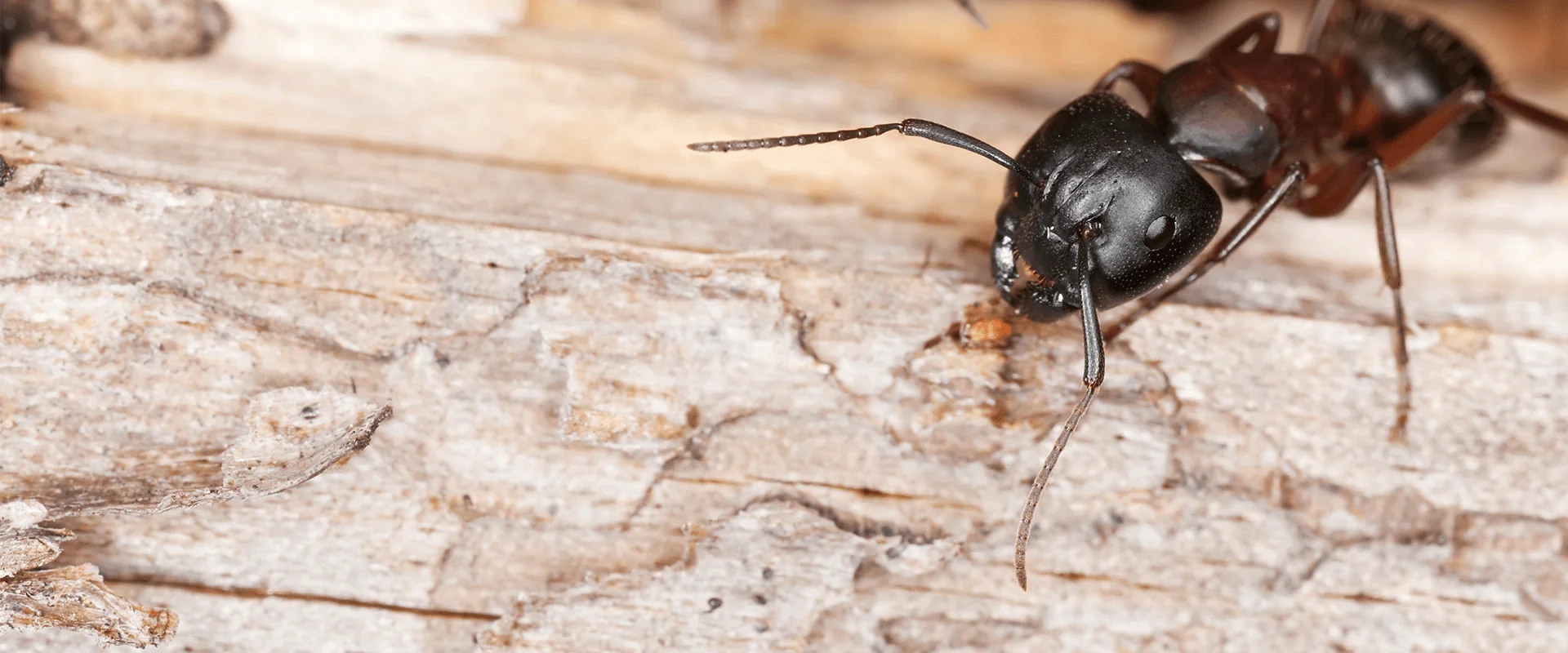
If they have a narrow, pinched waist, elbowed antennae, and differing wing sizes between their two sets, they are ants.
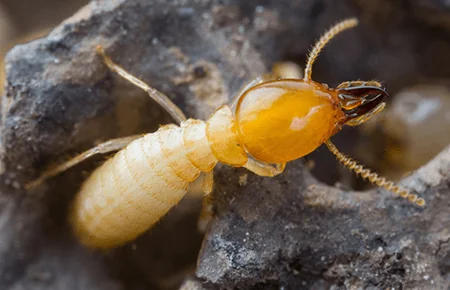
Termites, on the other hand, have a thick waist, making their bodies the same size all the way down their abdomen. They also have straight antennae and two sets of the same size wings.
What Causes An Ant Infestation?
Ants could try to get inside of your home for many reasons. Food is, by far, the greatest factor that attracts ants to your house. Ants are foragers and will come inside as they search for food.
If they find a good food source, they will continue to return on a steady basis. Oftentimes, this is not an indication that they are living inside your house, but they are simply using it as their main food source.
However, food may not be the sole factor for an uptick in ants. Seasonality tends to impact the likelihood of a potential infestation. Warm weather typically sees an increase in ant activity. Ants are cold-blooded insects, and as temperatures rise, they become more active and begin searching for food.
During the winter months, ants survive on stored food inside the nest. Once spring arrives, they leave the nest to forage again. Hunger drives them into homes in search of reliable food sources.
Heavy spring rain can also force ant populations indoors. When soil becomes saturated, ants relocate to dry areas, which often include residential structures.
Types of Ant Infestations
Carpenter Ant
Carpenter ants are usually black but can sometimes have a reddish tint to them. If you have an army of them crawling across your floor to get to the pet food dish, you’ll know it.
Even though carpenter ants are not a threat to humans, they can cause severe property damage as they tunnel through wood to build nests. If not dealt with, they will cost you tens of thousands of dollars in repairs.
Odorous House Ant
On the other hand, odorous house ants are dark brown to black in color and range in size from 1/16-1/8 inch, and they are known for nesting in wall cracks as well as under floors inside homes.
These ants can’t cause any structural damage to your property or transmit any disease, but they do can contaminate food and should be avoided if there’s signs of activity inside your home.
Pavement Ant
Pavement ants could look like house ants as they are about the same size, but they are more of a darkish brown to black in color.
You’d probably have seen their nests in or under cracks in pavement, and even though these ants do not pose a direct public health risk, they could potentially contaminate your food.
Do Ants Live Inside Homes?
There are a few things you can do to determine if you have ants living inside your walls.
- If the ants you have are carpenter ants, that is a sign in and of itself. Carpenter ants prefer to live in wood. If you don’t have any rotted wood around your home, there is a good chance they have a nest in your walls or floors.
- Listening to your walls or floors can point you towards an infestation. You can hear insect activity if you put your ear close enough to a colony.
- Look for rotted areas on the exterior of your home. You’ll usually find rot where gutters are broken or where rainwater rests next to the house.
- Hire a professional to do an inspection. When you get a company that has certified entomologists on staff, you’ll know that they have the knowledge to find those ants. 80% of what pest technicians do when they treat your home for ants is to locate and eradicate colonies. They don’t just spray around your house and hope for the best. If your pest controller is doing that, get a new one.
How Do Ants Find Their Way Into My Home?
Cracks between bricks, or tiny holes around doors and windows, are perfect entry points for ants to enter your home. Sometimes, ants find their way into your bathroom, your cabinets, and around your kitchen sink drain. They can maneuver through the tiniest of spaces.
This includes electrical and plumbing lines that enter your home’s structure from the outside.
An ant lays down a broken trail of scent when they forage for food, resembling a ‘dotted line’ of chemicals that they secrete.
When they find food, (a drop of juice, a few crumbs, or fallen food in those hard to clean places) the foraging ant fills up its ‘social stomach’ with as much food as it can.
Once it is full, if there is any food remaining, the ant scurries back to its nest, leaving a continuous line of scent along the way. The ant will begin sharing food with other members of its colony through its social stomach, and other ants will begin to follow the traced scent back to the food source.
Every time an ant visits the food source, it adds to the effectiveness of the scent trail.
How Do I Stop Ants from Coming into My House?
If the ants in your home are coming from outside, there are some things you can do to stop this:
-
Keep things clean. They’re looking for food sources.
-
Protect cabinet food. If they’re in your cabinets, put vulnerable food in sealed plastic containers.
-
If they are going for a pet food dish, put the dish down only during meal times and spray some vinegar and water around the bowl (1 part vinegar and 3 parts water).
-
If you see an ant trail, spray the entire trail with window cleaner, soapy water, or the vinegar concoction above. This will get rid of the trail pheromones ants leave behind. This scent is what allows them to travel on a path to where food is.
-
Use a caulking gun to seal up entry points.
It’s important to understand that while many people feel they can solve infestation issues with DIY solutions, there’s a good chance it will not work as intended.
Professional guidance is often the only way to safely identify every area of an infestation. This means that without professional help, ants are likely to reappear. Additionally, some products can be harmful to people and pets if they are not used correctly.
Get a Professional Preventive Treatment for Ants
If you have an ant infestation in your walls, it is a sign that your home is in need of some treatment. Consider getting those problems fixed by a professional pest control company to help exterminate ants and prevent them from coming inside your property.
Give us a call or fill out this form and get a free quote from one of our pest experts. You have a lot invested in your home; keep it safe from destructive pests.
Request Your Pest Control Estimate
Related Posts
Contact Us Today!
Do you need an estimate for service or have questions about pests? We’d love to hear from you!
Fill out the form and receive feedback today. For immediate service, please give us a call!
