Why Yellow Jacket Colonies Are Most Dangerous in Late Summer
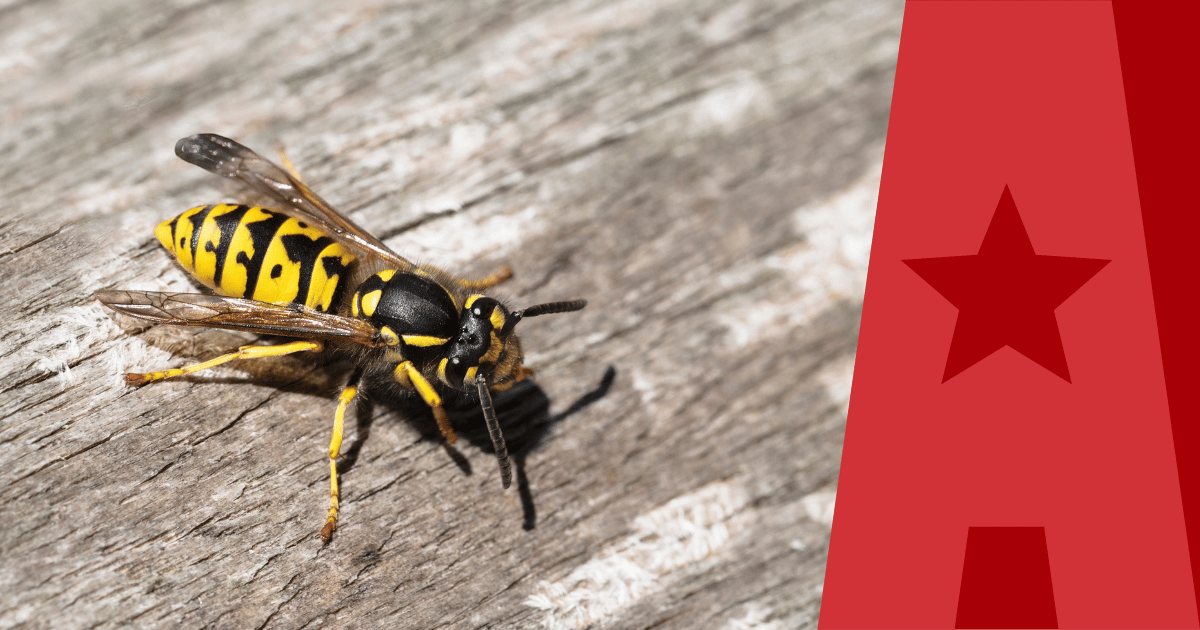
The Big Takeaways:
- Yellow jacket colonies reach peak population in late summer, sometimes numbering several thousand workers. More workers means more defenders, a faster alarm response, and a much higher risk from any nest disturbance.
- Late-season aggression isn’t random. When larval production slows, workers lose their primary sugar source and shift to scavenging for sugar-rich food, which brings them into more frequent contact with people and makes them significantly more defensive.
- Yellow jacket nest removal is one of the most risk-prone pest control situations a homeowner can attempt without professional equipment and protective gear.
The Yellow Jacket Colony Cycle and Why Late Summer Is the Turning Point
Most homeowners think of yellow jackets as a summer pest. The reality is more specific than that. Yellow jackets are an annual colony species, which means every nest starts from scratch each spring with a single overwintered queen and ends when the colony collapses in late fall. What happens between those two points determines why late summer is when the real danger begins.
Most yellow jacket colonies nest underground. Aerial nests, the small papery structures hanging from a shrub or overhang, do happen, but they’re the exception rather than the rule. The Maryland Biodiversity Project recorded only 18 aerial yellow jacket nests over a nine-year survey period, a rare enough sighting that most homeowners will go their whole lives without spotting one. The far more common and far more dangerous scenario is a nest hidden entirely underground with nothing but a small entrance hole to give it away.
A queen emerges from overwintering in early spring and immediately begins building a small nest and laying eggs. The first generation of workers, typically emerging in late spring, takes over construction and foraging while the queen shifts to full-time egg-laying. Through June and July, the colony grows steadily but stays relatively contained. According to research from the University of Wisconsin-Madison, a yellow jacket nest that starts with a single queen can number 3,000 or more foraging workers by September.
That growth rate is what makes the yellow jacket season so deceptive. A nest discovered in June is a fraction of the size it will be two months later. Homeowners who spot activity and decide to wait often find themselves dealing with a colony that has grown well beyond the point where non-professional intervention makes sense.
For context on what wasp and stinging insect activity looks like in the earlier part of the season, spring is when colonies are smallest and most manageable, but also the most difficult to detect.
Contact Us Today
If you have questions about our services, plans, or pricing, we are here for you. Call or fill out the form to communicate by email.
Why Yellow Jackets Get More Aggressive in Late Summer
The behavioral shift that makes late-season yellow jackets more defensive than earlier in the season comes down to a specific change in colony biology. Through most of the summer, worker yellow jackets forage primarily for protein, hunting insects and scavenging meat to feed the thousands of developing larvae in the nest. Those larvae, in turn, produce a sugary secretion that adult workers consume for energy. It’s a closed loop that keeps the colony fed and the workers relatively focused on foraging rather than defensive behavior.
By late summer, that loop breaks down. According to research from the University of Kentucky, yellow jacket colonies reach maximum population just as larval production slows and new reproductive queens and males mature and leave the nest. The sugary secretions from larvae drop off at the exact moment the worker population peaks. Workers become food-deprived, shift their foraging entirely toward carbohydrates and sugars, and begin competing aggressively with anything that comes near a food source, including people at outdoor tables, trash cans, and picnic areas.
That combination – peak population, food scarcity, and a colony entering its final life stage – produces yellow jackets at their most aggressive and desperate.
The Biology Behind the Sting Risk
A few specific mechanisms make late-summer yellow jacket encounters more dangerous than earlier in the season:
- Alarm pheromones. When a yellow jacket stings, or is crushed against skin or clothing, it releases a chemical signal that immediately recruits nearby workers to join the response. Crushing one on a person is especially problematic, since the pheromone is released right at the point of contact, drawing other workers toward that exact spot rather than away from it. A larger colony produces a larger and faster coordinated reaction to any perceived threat near the nest.
- Multiple stings per insect. Unlike honeybees, yellow jackets have smooth stingers that don’t detach after use. A single yellow jacket can sting repeatedly, and a disturbed late-season colony can deliver dozens of stings within seconds.
- Ground nest sensitivity. Many yellow jacket colonies nest underground, making them nearly invisible until disturbed. Mowing, digging, or simply walking near an entrance can trigger an immediate defensive response with no visible warning.
- Extended pursuit. Yellow jackets will pursue a perceived threat well away from the nest, particularly in late summer when their defensive threshold is at its lowest.
- Dietary shift attractants. The switch from protein to carbohydrate foraging brings yellow jackets into more frequent contact with people, drawn to sweet drinks, ripe fruit, and outdoor food. Sanitation matters more now than ever: sealed trash and covered food cut down on accidental encounters.
Yellow Jacket Nest Types and Where They Build
Not all yellow jacket nests look the same or present the same access challenges for removal. Identifying what species and nest type you are dealing with before taking any action is the first step toward handling the situation safely.
| Species | Typical Nest Location | Nest Appearance | Peak Colony Size | Late-Season Risk Level |
| Eastern Yellow Jacket | Underground, wall voids, attics | Enclosed papery envelope, hidden from view | 1,000 to 4,000 workers | Very High |
| German Yellow Jacket | Underground, structural voids | Similar enclosed structure, often inside walls | Up to 3,000 workers | Very High |
| Southern Yellow Jacket | Underground | Subterranean, single entrance hole | Up to 4,000 workers | Very High |
| Aerial Yellow Jacket | Shrubs, low tree branches, overhangs | Small exposed papery envelope | Several hundred workers | High |
Ground nests are the most hazardous for homeowners because the entrance is small, often obscured by grass or leaf litter, and the colony’s full size is completely hidden below the surface. A single entrance hole roughly the size of a silver dollar can lead to a nest containing thousands of workers. Disturbing the entrance, whether by mowing, digging, or stepping nearby, produces an immediate and coordinated response from the entire colony.
The underground void itself adds risk beyond the stings. A foot can sink into the cavity and get stuck right at the nest entrance, which turns a startled step into a prolonged encounter with the colony rather than a quick one. Even without any yellow jacket activity, the hollowed-out void underneath the surface can be a tripping hazard in the yard. Skunks looking for an easy meal will also dig into ground nests, tearing up the surrounding lawn in the process and leaving an already hazardous nest even more exposed and unstable.
Identification of common stinging insect species in the region, including how to tell yellow jackets apart from hornets and paper wasps, is worth doing before deciding on a course of action.
When Yellow Jacket Nest Removal Becomes a Professional Job
Early-season removal of a small, accessible yellow jacket nest might be a manageable task for a careful homeowner who doesn’t have life-threatening allergy concerns. Late-season removal of an established colony is a different situation entirely, and the factors that make it more dangerous compound quickly.
Signs that a yellow jacket nest has crossed the threshold where professional removal is the right call:
- The nest is located underground or inside a wall void, attic, or other structural cavity where the full extent of the colony is not visible
- You have already attempted to address the nest, and activity has continued or increased
- Flight activity near the nest entrance is heavy, indicating a large and active population
- The nest is near a high-traffic area of the property where children, pets, or guests are regularly present
- Someone in the household has a known or suspected venom allergy
- The nest cannot be approached safely without a ladder or specialized protective equipment
Yellow Jacket Prevention and When to Call for Pest Control
The most effective yellow jacket prevention happens before colonies establish in spring, but there are meaningful steps homeowners can take throughout the season to reduce pressure and avoid triggering encounters with established colonies.
A few practical prevention measures worth following through yellow jacket season:
- Inspect the property perimeter in early spring for queen activity near ground-level gaps, wall voids, and eave openings before nests establish
- Keep outdoor trash cans tightly sealed and away from outdoor dining or entertaining areas
- Avoid leaving sweet drinks, ripe fruit, or uncovered food outside, particularly from July onward when colonies begin shifting to carbohydrate foraging
- When recycling, ensure all containers are cleaned beforehand
- Check lawn areas carefully before mowing in late summer, watching for increased flight activity near the ground that may indicate an underground entrance
- Avoid wearing floral perfumes or strongly scented products when spending time outdoors near areas where yellow jacket activity has been noted
- Mark the area of an active nest, and keep people and pets away until it can be assessed from a safe distance
Professional yellow jacket pest control addresses both the active colony and the conditions that make the property attractive to nesting queens. For ground nests specifically, professional treatment reaches the colony through the entrance with product formulations that surface sprays cannot replicate.
What Professional Yellow Jacket Pest Control Involves
A professional assessment starts with identification: confirming the species, locating the nest entrance, estimating the colony size based on flight activity, and evaluating proximity to high-traffic areas. For ground nests, that assessment also determines whether the colony has been established in a simple underground chamber or expanded into a structural void, which affects both the treatment approach and the follow-up needed.
Early-season treatment is faster and carries less risk. Late-season treatment of a fully established colony requires full protective equipment, a targeted application strategy, and, in some cases, a follow-up visit to address surviving pests after the primary treatment. A nest treated in August may still show some activity for several days as foragers that were away from the nest at the time of treatment return and encounter the treated area.
What homeowners are really paying for with professional treatment is risk transfer. Handling an established colony means absorbing both the sting risk and the pesticide exposure risk that come with a direct application, and a trained technician takes that on instead of the homeowner. That’s paired with the experience to read a colony correctly (species, size, location, and how defensive it’s likely to be) and identify the conditions on the property that let it establish in the first place. Addressing those conditions alongside treatment is what keeps a new queen from finding the same spot next spring, which matters more than any single treatment visit on its own.
For homeowners dealing with recurring yellow jacket pressure across multiple seasons, the pattern often points to nesting conditions on the property that keep attracting queens each spring. Addressing those conditions alongside treatment produces more lasting results than treating each nest in isolation.
American Pest serves homeowners across Maryland, Virginia, Washington, DC and the surrounding area with stinging insect control programs timed to the colony life cycle. Contact our team to schedule an assessment before the season peaks further.
Related Posts
Contact Us Today!
Do you need an estimate for service or have questions about pests? We’d love to hear from you!
Fill out the form and receive feedback today. For immediate service, please give us a call!