Trees Most at Risk From Spotted Lanternfly Damage
The Big Takeaways
- Spotted lanternflies are invasive pests that damage various tree species by feeding on their sap and excreting honeydew.
- Certain trees, like Tree of Heaven and Black Walnut, face a higher risk from spotted lanternflies and may require strategic management.
- Look for warning signs of infestation such as egg masses, oozing sap, honeydew residue, and wilting leaves.
- Successful protection involves monitoring and targeted treatments, especially for high-risk tree species.
- Professional help is advisable if you notice significant infestations or if DIY efforts have been ineffective.
Spotted lanternflies don’t discriminate between a backyard garden and a working vineyard. Since their arrival in the mid-Atlantic, these invasive insects have worked their way through forests, orchards, and residential landscapes with little resistance. If you have trees on your property, understanding spotted lanternfly tree damage and which species face the highest risk is the first step toward protecting your yard.
Contact Us Today
If you have questions about our services, plans, or pricing, we are here for you. Call or fill out the form to communicate by email.
What Trees Do Spotted Lanternflies Actually Eat?
Spotted lanternflies are what researchers call “polyphagous” feeders, meaning they feed on a wide variety of plant species. According to Penn State, the insect uses its piercing mouthparts to tap into the vascular tissue of plants and extract sap. That sap contains carbohydrates that the insect metabolizes, but the damage it leaves behind is what concerns property owners and arborists.
The feeding process weakens plants over time. As lanternflies extract sap, they excrete a sticky substance called honeydew that coats leaves, branches, and anything underneath. That honeydew then promotes the growth of black sooty mold, which further reduces a plant’s ability to photosynthesize. A tree weakened by repeated feeding cycles going into fall is far less likely to survive a harsh winter.
Spotted lanternflies show a clear preference for certain hosts, but their list of viable food sources is long. This is part of what makes spotted lanternfly control so complex: there isn’t one singular plant you can remove to limit their presence.
Spotted Lanternfly Host Trees: High-Risk vs. Low-Risk Species
Not all trees face the same level of threat. The table below outlines common trees and how they stack up as spotted lanternfly hosts.
| Tree Species | Risk Level | Notes |
| Tree of Heaven (Ailanthus altissima) | Very High | Preferred host; removal can attract lanternflies to other plants |
| Black Walnut | Very High | A favored host; repeated feeding causes significant dieback |
| Willow | Very High | Highly attractive to feeding adults and nymphs |
| Maple | High | Commonly targeted; sap loss weakens trees heading into winter |
| Birch | High | Vulnerable to sooty mold buildup following feeding |
| Apple and Crabapple | High | Major concern for orchards and residential plantings |
| Grape Vine | High | One of the most economically damaging host plants |
| Oak | Moderate | Will feed on oaks, but typically not a preferred host |
| Pine | Low | Less commonly targeted; still worth monitoring |
| Dogwood | Low | Occasional feeding reported; generally lower risk |
The Tree of Heaven deserves special mention. It is the spotted lanternfly’s most preferred host, and in many infested areas, it functions almost like a breeding hub. Removing it from your property can disrupt feeding patterns, but it can also push lanternflies toward other plants nearby. Managing it strategically, rather than simply cutting it down, is often the more effective approach.
Warning Signs of Spotted Lanternfly Tree Damage
Catching an infestation early gives you a much better chance of limiting long-term harm. Watch for these indicators on trees around your property:
- Gray or brown egg masses on bark, typically laid in neat rows and covered with a waxy, mud-like coating
- Weeping wounds or oozing sap on trunks and branches where feeding has occurred
- A shiny, sticky film on leaves or on surfaces beneath the tree (honeydew residue)
- Black sooty mold developing on leaves, bark, or surrounding ground cover
- Wilting, curling, or yellowing leaves without another obvious cause
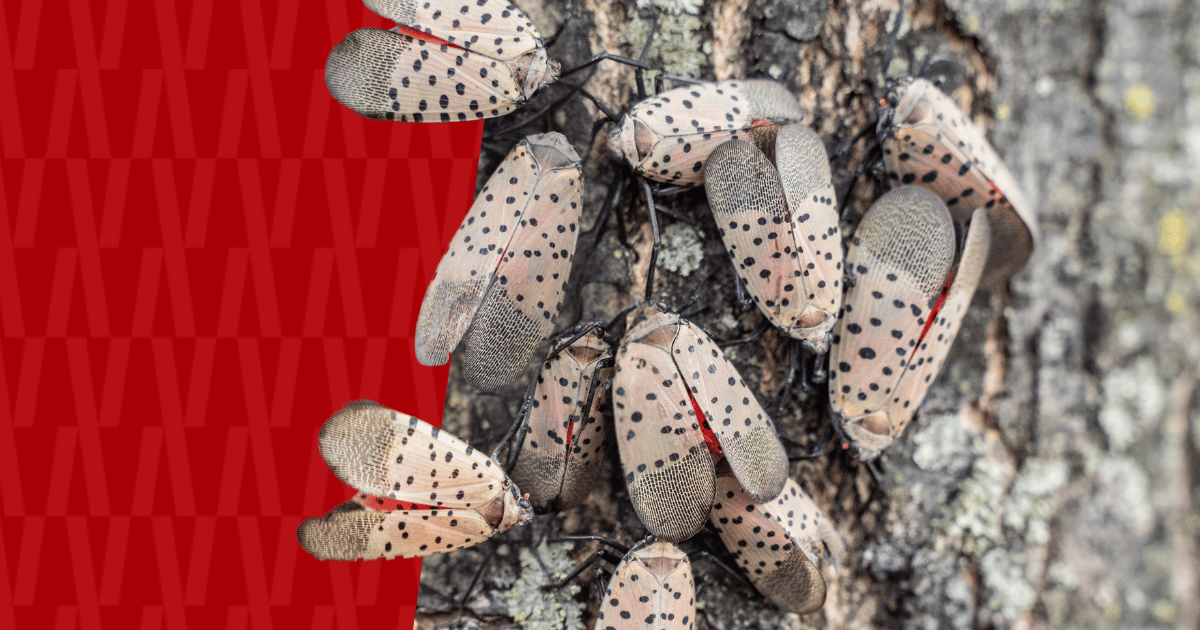
- Visible clusters of nymphs (red and black in early stages, gray-spotted as they mature) or adult lanternflies on trunks and branches
If you’re seeing any of these signs, the next step is treatment. Consult your local horticultural experts or Cooperative Extension to get more information about what is recommended in your region.
Practical Steps for Property Owners
A few practical steps property owners can take alongside professional treatment:
- Avoid moving firewood, outdoor furniture, or equipment from infested areas, which can spread egg masses to new locations
- Scrape and destroy egg masses found on outdoor furniture, vehicles, and any low, reachable surfaces around your property
- Remove or manage Tree of Heaven on your property in coordination with a pest professional
- Check your property regularly through late summer and fall, when adult populations peak
How American Pest Can Help
American Pest offers seasonal mosquito, tick, and spotted lanternfly treatments designed to target and stop the nymphs and adult spotted lanternflies in their tracks. Our service treats areas around a home and yard that provide harborage for these pests, including tree trunks, crawlspaces, deck undersides, and perimeter bushes.
To schedule a mosquito, tick, and spotted lanternfly service with American Pest, contact our team today.
Related Posts
Contact Us Today!
Do you need an estimate for service or have questions about pests? We’d love to hear from you!
Fill out the form and receive feedback today. For immediate service, please give us a call!