Where Wasps and Hornets Start Building Nests in Early Spring
The Big Takeaways
- Homeowners should be proactive about wasp nest removal, as early spring is the best time to detect and address nests before they grow too large.
- Wasp colonies begin with a single queen in early spring, so finding and removing nests early is crucial to prevent aggressive defenses later.
- Common nesting sites include eaves, deck railings, and ground burrows; identifying these areas helps in effective inspection.
- DIY removal of established nests can be risky; professional wasp nest removal ensures safe and thorough treatment.
Homeowners may not think about stinging insects until someone in the yard gets stung. By that point, a colony that started as a single queen in early spring has had months to grow, and what began as a nest the size of a golf ball may now house hundreds or thousands of workers prepared to defend it aggressively. The window for stopping that growth early is short, and it opens much sooner than most people realize.
Understanding where wasps and hornets choose to build nests in early spring, and why, gives homeowners a meaningful advantage. A nest found in March or April is a manageable problem. The same nest discovered in August is an entirely different situation.
Where Wasps Begin Building Nests in Spring
How Wasp Colonies Get Started
Every wasp colony in the D.C., Maryland, and Virginia region begins the same way: a single fertilized queen emerges from her overwintering site as temperatures begin to consistently climb above 50 degrees, typically sometime between late March and early May, depending on the year. As the University of Maryland notes, each queen works alone in the early weeks, constructing the nest, foraging for food, laying eggs, and defending the site entirely by herself until the first generation of workers emerges to take over those duties.
That early period is when intervention is most practical. A nest with no workers yet is a nest with minimal defensive capacity. Queens produce a papery building material by chewing wood fiber mixed with saliva, which they shape into the characteristic comb structure that will eventually house the colony. The type of wasp determines where that structure gets placed.
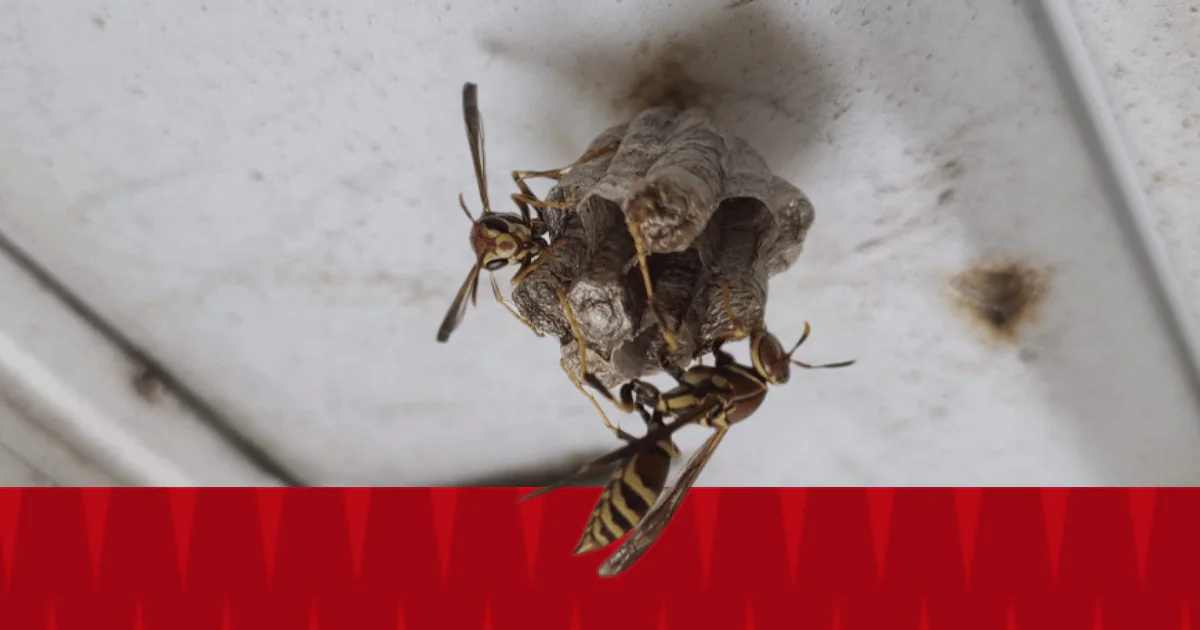
Paper wasps, one of the most commonly encountered species around Maryland homes, prefer sheltered, elevated locations with easy access to the outside. Common early spring nesting sites include:
- Beneath roof eaves and overhangs, where the nest can be anchored and protected from rain
- Inside open garage rafters, especially toward the back corners, where foot traffic is low
- Under deck railings or the underside of deck boards
- Around door and window frames, particularly on south-facing walls that warm up earliest in the season
- Inside grills, outdoor furniture, and playground equipment left idle through winter
- In dense ornamental shrubs close to the home’s exterior.
Yellowjackets, often mistaken for paper wasps due to similar coloring, have a preference for concealed and enclosed spaces. Ground nests built inside abandoned rodent burrows are among the most common and the most dangerous, because they are easy to accidentally disturb with a lawn mower or a footstep. Yellowjackets also commonly nest inside wall voids, under concrete slabs, and in attic spaces. As research from the UC Agriculture and Natural Resources explains, yellowjacket and paper wasp queens typically begin establishing nests in late winter to early spring, with nest populations growing steadily from spring through midsummer as larvae require large amounts of protein.
Because wasp nests can be established in so many different locations around a property, finding wasp nests before populations peak requires a deliberate inspection of the areas where they are most likely to start. By the time workers are regularly visible flying in and out, the colony is already well underway.
Contact Us Today
If you have questions about our services, plans, or pricing, we are here for you. Call or fill out the form to communicate by email.
Where Hornets Begin Building Nests in Spring
Hornets, a larger type of wasp, operate on a similar seasonal timeline to their smaller cousins, but their nesting habits and preferred locations differ in ways that matter for detection and nest removal. The two species homeowners in this region are most likely to encounter are the bald-faced hornet and the European hornet, and they behave quite differently from one another.
Bald-faced hornets build large, enclosed aerial nests made of the same paper-like material as wasp nests but constructed as a fully enclosed structure rather than an open comb. These nests are almost always elevated, most commonly in trees and shrubs, attached to the eaves of buildings, or along utility lines and fence posts. In early spring, a new bald-faced hornet nest is small enough to fit in the palm of a hand. By late summer, the same nest can reach 14 inches in diameter and hold several thousand workers. What makes early detection particularly difficult is that spring foliage often conceals these nests from view until they are well established.
European hornets are less commonly identified by homeowners, but are present throughout the mid-Atlantic region. Unlike bald-faced hornets, they show a strong preference for enclosed nesting sites: hollow tree cavities, wall voids, outbuildings, and attic spaces are typical choices. They are also one of the few stinging insect species that remains active after dark, which can make encounters around porch lights unexpectedly alarming for homeowners who do not initially recognize the source.
Understanding how to make your yard less appealing to wasps and hornets starts with knowing which species is present and where they are most likely to establish, because the nesting preferences of each species point directly toward the inspections that matter most on your specific property.
Wasps vs. Hornets: How They Compare
Both wasps and hornets follow a similar colony lifecycle, but their differences in size, nesting location, behavior, and risk level shape how any infestation should be addressed. The table below covers the key distinctions between the species most commonly encountered in Maryland, D.C., and Virginia:
| Characteristics | Paper Wasp | Yellowjacket | Bald-Faced Hornet | European Hornet |
| Size | 3/4 to 1 inch | 1/2 to 3/4 inch | 5/8 to 3/4 inch | 3/4 to 1.4 inches |
| Nest Location | Eaves, door frames, rafters, shrubs | Ground burrows, wall voids, attics | Trees, shrubs, eaves, elevated structures | Hollow trees, wall voids, attics, outbuildings |
| Nest Appearance | Open comb, umbrella-shaped, no envelope | Enclosed paper envelope, often hidden | Large enclosed gray paper structure | Enclosed paper envelope inside a cavity |
| Colony Size at Peak | 20 to 75 adults | Up to several thousand | 100 to 400 adults | 200 to 400 adults |
| Aggression Level | Moderate, defensive near nest | High, most aggressive common species | High, will pursue perceived threats | Moderate to high, especially near nest |
| Nocturnal Activity | No | No | No | Yes |
| Nests Reused | No | No | No | Occasionally |
| Spring Queen Activity | March to May | March to May | April to May | April to May |
One shared characteristic worth noting across all four species: none of them reuse nests from the previous season. A nest found attached to your eaves in fall or winter is vacant, but it signals that the location was suitable for nesting once, and a new queen may find it attractive again come spring.
What Wasp Activity in Spring Is Actually Telling You
A single wasp seen flying along your roofline or investigating your deck railing in early spring is almost always a queen in the process of scouting for a nesting site. This is the most actionable moment in the entire seasonal cycle.
Spotting a queen does not necessarily mean a colony is established. It means there is still time to take preventive action before one is. A few steps that reduce the likelihood of spring nesting taking hold around your home:
- Seal gaps and openings in your roofline, soffits, fascia boards, and exterior siding before temperatures warm in early spring. Queens actively seek out these entry points as potential nesting cavities.
- Walk your property perimeter in early spring and check eaves, overhangs, window and door frames, deck undersides, and any stored outdoor equipment for early nest construction. A nest the size of a walnut can be addressed with far less risk than one the size of a basketball.
- Fill in any ground holes or abandoned burrow openings in lawn and garden areas, as these are primary targets for yellowjacket queens.
- Remove old nests from previous seasons, even though they will not be reused. Their presence near a structure can make a location appear suitable to a scouting queen.
- Keep trash receptacles sealed and positioned away from the home’s exterior. Foraging wasps are drawn to protein and sugar sources, and open garbage containers are a reliable attractant.
Early spring is also the right time to schedule a professional inspection if wasp or hornet activity was a recurring issue the prior season. Addressing the conditions that made your property attractive the first time reduces the likelihood of it happening again.
Calling Professional Wasp and Hornet Control
DIY wasp nest removal carries real risk, and that risk increases significantly as the season progresses and colony populations grow. A nest with a few dozen workers is a very different encounter than one with several hundred, and disturbing either without proper training and equipment can result in a defensive response that is rapid and potentially dangerous or fatal, particularly for anyone with a venom allergy.
Nests located inside wall voids, attics, crawl spaces, or ground burrows present additional complexity. Treating a nest inside a wall without fully addressing the colony can cause wasps to push deeper into the structure or find new exit points into living areas. Professional hornet nest removal and wasp pest control involves identifying the species, locating all nest activity on the property, and applying targeted treatments based on where and how the colony is established.
The stinging insect control services at American Pest include a property inspection to locate active nests and treat them appropriately before populations peak. If you noticed significant wasp or hornet activity around your home last season, spring is the time to act. For help with stinging insects around your home, contact American Pest today.
Related Posts
Contact Us Today!
Do you need an estimate for service or have questions about pests? We’d love to hear from you!
Fill out the form and receive feedback today. For immediate service, please give us a call!
