Why Drugstore Beetles Keep Appearing After You Throw Out Food
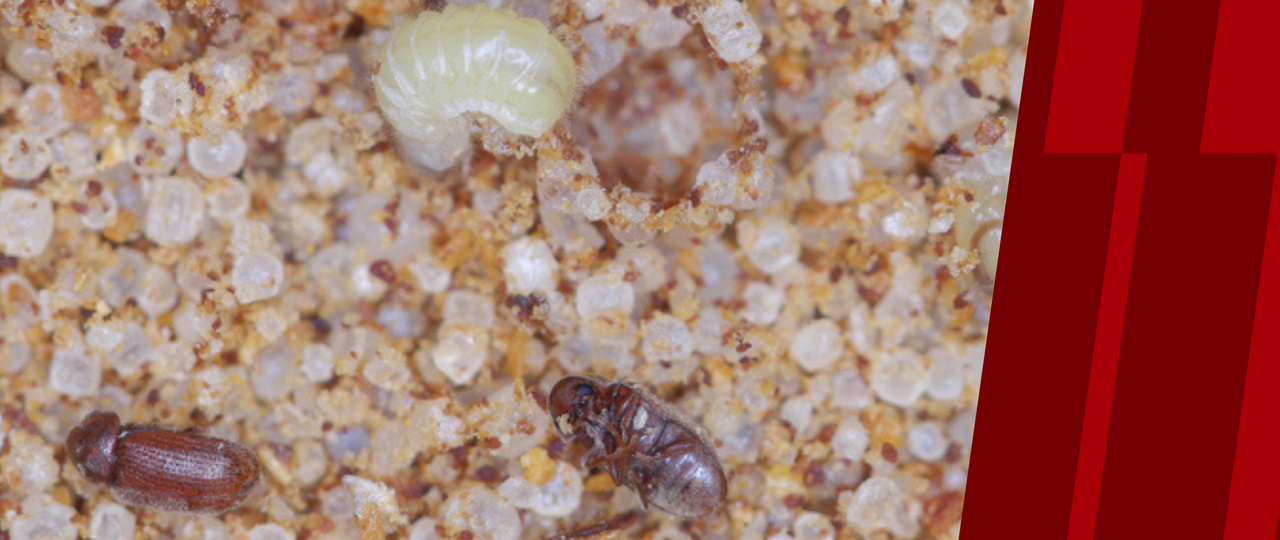
Table of Contents
The Big Takeaways:
- Drugstore beetles often continue appearing after food is discarded because eggs and larvae remain hidden inside packaging and pantry surfaces.
- A drugstore beetle infestation can spread beyond food products to pet treats, spices, packaging, and stored household items.
- Drugstore beetle eggs and larvae develop out of sight, which delays detection and allows activity to continue.
Drugstore beetles are a common pantry pest that can be difficult to eliminate once established. Many homeowners first notice small reddish brown beetles near kitchen cabinets or windows, and they are able to track those sitings back to contaminated food. They assume the problem will end after throwing this food away. In reality, drugstore beetles often continue to appear long after those items are gone.
This persistence is tied to how drugstore beetles reproduce, where they hide, and what they can feed on. Drugstore beetles infest a wide range of stored products and can survive inside packaging that appears sealed. Because early life stages remain hidden, infestations frequently go unnoticed until adult beetles begin emerging.
Understanding the behavior and lifespan of drugstore beetles explains why repeat sightings are common and why professional intervention is often required to fully resolve the problem.
Why Drugstore Beetles Keep Appearing Even After You Toss Food
Throwing away infested food is a logical first reaction, but it does not resolve a drugstore beetle infestation on its own. Adult beetles are the visible portion of the population. By the time they are seen, eggs and larvae are often already present elsewhere in the pantry or storage area.
Drugstore beetles spread easily once introduced into the home. Adults can fly and move away from the original source, laying eggs in multiple locations. This means infestations may continue even after one contaminated item is removed.
Another reason beetles keep reappearing is delayed development. Eggs laid weeks earlier may hatch after food is discarded, leading to new adult beetles emerging later. This creates the impression that beetles are returning, when in reality they were present the entire time.
American Pest commonly finds that infestations persist because hidden sources were never identified. Without locating every area supporting development, activity continues.
Drugstore Beetle Eggs And Larvae Can Stay Hidden In Pantry Areas
Drugstore beetle eggs are tiny, oval, and white, making them extremely difficult to detect. Females lay eggs directly on suitable dry organic materials or in nearby cracks and crevices. Once eggs hatch, larvae feed internally within the infested product.
Because larvae develop inside packaging or stored materials, they remain out of sight for much of their life cycle. During this time, there may be no visible beetles at all. In some cases, the only sign of activity is fine powder or debris created as larvae feed and pupate.
Eggs and larvae may be found in:
- Seams and folds of packaging
- Cracks in pantry shelving
- Spilled product residue along cabinet edges
- Items that appear unopened or undisturbed
This hidden development allows infestations to continue even after a pantry appears clean. Professional inspection is often required to locate these concealed breeding sites.
Where Do Drugstore Beetles Come From and How an Infestation Can Spread
Many property owners ask where drugstore beetles come from in the first place. In most cases, they are brought into a building inside packaged goods. Grocery stores, warehouses, and shipping facilities can all serve as starting points.
Once inside, beetles spread easily. Adults are capable of flying and can move from one room to another. This mobility allows infestations to expand beyond the pantry into nearby storage spaces.
Drugstore beetles are also known for their ability to chew through various objects. Thin cardboard, paper, and some plastic materials offer little resistance. This allows beetles to access new food sources and lay eggs in multiple locations.
American Pest frequently finds infestations that extend beyond the kitchen. Closets, utility rooms, and storage areas can all support beetle activity if suitable materials are available.
Common Sources Beyond Food, Like Pet Treats, Spices, And Other Packaging
One reason infestations can persist is that drugstore beetles feed on far more than standard pantry foods. Homeowners often remove obvious items but overlook other materials that support beetle development.
Common sources include:
- Pet treats and dry pet food
- Spices and seasoning containers
- Vitamins and supplements
- Tea bags and herbal products
- Cardboard boxes and paper packaging
Drugstore beetles can survive on items many people do not associate with pests. Their ability to digest a wide range of materials allows infestations to continue even after major pantry cleanouts.
Packaging itself can also serve as a breeding site. Beetles may lay eggs in seams, folds, or glued areas. This allows activity to continue even if the contents appear untouched.
Because these sources are easy to miss, infestations often reappear after homeowners believe the problem is solved. Professional inspection is the most reliable way to identify all contributing factors.
Contact Us Today
If you have questions about our services, plans, or pricing, we are here for you. Call or fill out the form to communicate by email.
Drugstore Beetle Lifespan And Why Professional Drugstore Beetle Removal Works Best With American Pest
The drugstore beetle’s lifespan explains why infestations can last for months without proper intervention. Drugstore beetles undergo complete metamorphosis, progressing through egg, larval, pupal, and adult stages. Under favorable conditions, this cycle typically takes between 40 and 50 days. In cooler environments or where food is limited, development may extend significantly longer.
Female beetles lay eggs directly on suitable dry organic materials. Larvae hatch and feed internally, remaining concealed while they grow. After pupation, adult beetles emerge and may live for several weeks. During this time, females lay additional eggs, allowing multiple generations to overlap.
This overlap means eggs, larvae, pupae, and adults may all be present at the same time. Removing visible beetles does not stop eggs from hatching later, which is why infestations often appear to return.
Professional drugstore beetle removal works best because it addresses every stage of the life cycle. American Pest technicians are trained to identify the original source, locate hidden development areas, and address conditions that allow beetles to spread. Treatments follow Integrated Pest Management practices overseen by staff entomologists to resolve infestations thoroughly and responsibly.
DIY attempts often fail because internal feeding and hidden eggs remain untouched. In some cases, incorrect methods allow infestations to continue longer than expected. With nearly 100 years of experience serving Maryland, Virginia, and Washington, DC, American Pest provides professional solutions designed to stop drugstore beetle infestations and to help prevent repeat activity. If beetles keep appearing after food has been discarded, contacting the team of experts at American Pest is the most reliable way to resolve the issue and protect your home.
Related Posts
Contact Us Today!
Do you need an estimate for service or have questions about pests? We’d love to hear from you!
Fill out the form and receive feedback today. For immediate service, please give us a call!