How Landscaping Can Lead to More Ants in Your Home
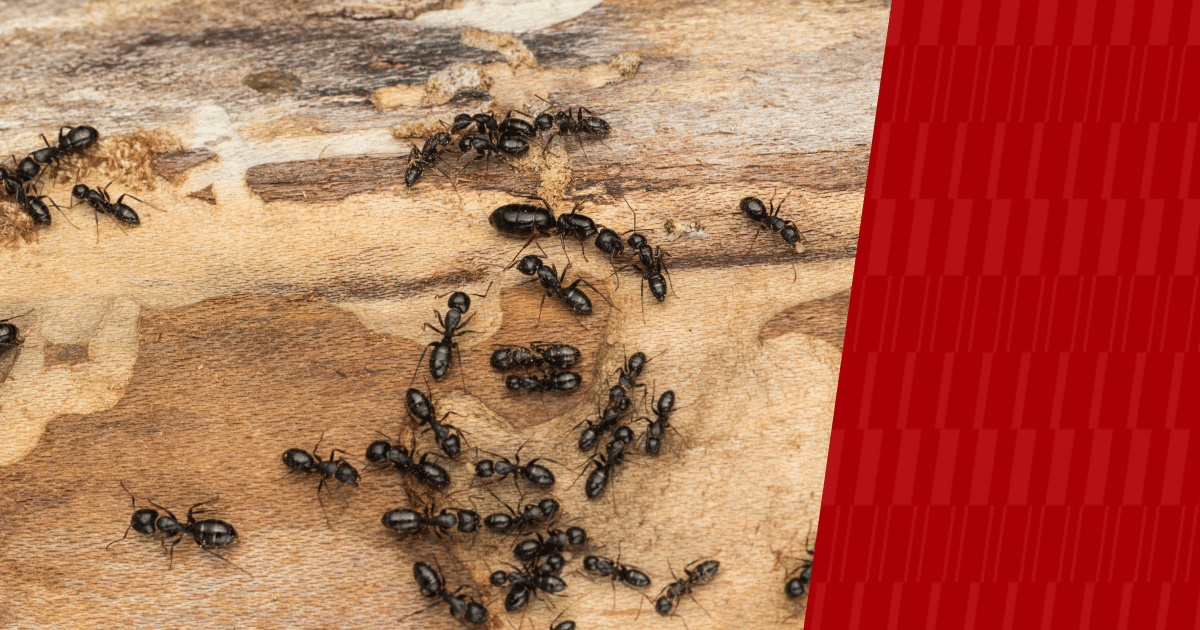
Table of Contents
The Big Takeaways
- Your landscaping choices, such as excessive mulch, overwatering, and firewood placement, may invite ants closer to your home.
- Certain plants attract ants due to their relationship with aphids, which produce honeydew that ants seek.
- Some common landscaping habits worsen ant problems, including layering mulch without removing old material and planting flush against the foundation.
- Ants enter homes through small gaps and follow pheromone trails, making DIY solutions often ineffective.
- To prevent ant infestations: trim vegetation, seal cracks, and address moisture issues; and consider professional pest control for established colonies.
Your home’s curb appeal might be working against you. A freshly mulched garden bed, a row of flowering shrubs, and neatly stacked firewood along the fence line all look great from the street. But from an ant’s point of view, they look even better. The outdoor choices you make around your home’s foundation can quietly set the stage for an indoor ant problem, and many homeowners never make the connection.
If you keep finding ants in your house and can’t figure out why, it might be time to take a walk around outside and look at your landscaping with fresh eyes.
Why Your Yard Is Inviting Ants Closer to Your Home
Ants are constantly searching for three things: food, moisture, and shelter. A well-tended yard often delivers all three without the homeowner realizing it.
Excessive mulch is one of the biggest contributors. It holds moisture, stays warm, and goes largely undisturbed for long periods of time. For many ant species, that combination makes it an ideal nesting site. When mulch beds sit directly against your home’s foundation, any colony that takes up residence there has a very short distance to travel before it finds its way inside through cracks in your windows and siding, gaps around utility lines, or damaged weatherstripping.
Overwatered garden beds can create similar conditions. Saturated soil and standing moisture near your foundation give ants a reliable water source and soften the ground in ways that make nesting easier.
Firewood stacked against or near your home is another common issue. Wood piles provide both shelter and, when they begin to decay, the damp conditions that carpenter ants specifically seek out for nesting. Carpenter ants do not eat wood the way termites do, but they excavate it to build tunnels and galleries. Ants can move from the woodpile to the wood of your home, which can compromise the structural integrity of your home over time.
Some Plants That Attract Ants
Not all landscaping plants are equal when it comes to pest activity. Some of the most popular choices for residential gardens are also among the most likely to draw ants toward your home, and it often comes down to a pest you may not even notice at first.
Overhanging tree branches and shrubs that make direct contact with your exterior walls give ants a direct route inside. Ants are capable of traveling long distances, and any vegetation that bridges the gap between the ground and your home’s exterior acts as a ready-made highway.
Many common landscape plants, including roses, crape myrtles, and ornamental shrubs, are known to support aphid populations. Aphids are small, soft-bodied insects that cluster on stems and the undersides of leaves, feeding on plant sap and reproducing quickly enough that a minor presence can become a significant infestation within a single growing season. As they feed, they produce a sugary liquid called honeydew as a byproduct. Ants are highly attracted to honeydew, and they will actively tend to aphid colonies to protect that food source. When aphid-heavy plants sit close to your foundation, ants foraging between those plants and your home can find entry points and begin trailing indoors.
This is why ant pest control often starts outside. Addressing aphid activity in your garden is part of managing the broader pest picture around your property. If you are seeing ants trailing along your foundation or appearing regularly near windows and doors, the source may be in your flower beds and trees rather than inside your walls. Learning how to recognize the signs of an ant infestation early can help you act before a small trail becomes a larger colony problem.
Contact Us Today
If you have questions about our services, plans, or pricing, we are here for you. Call or fill out the form to communicate by email.
Landscaping Habits That Can Make Ant Problems Worse
Some of the most common landscaping routines unintentionally make ant problems worse. A few specific habits are worth reconsidering:
- Layering new mulch on top of old mulch without removing the previous year’s application. As mulch ages and breaks down, it becomes increasingly moist and hospitable for nesting ants. Keeping mulch depth to two to three inches and removing the old layer before adding new material reduces this risk significantly.
- Placing garden beds flush against the foundation. Keeping at least a foot of clear space between planted areas and your home’s exterior walls allows moisture to dissipate and removes the sheltered conditions ants seek when searching for entry points.
- Allowing dense ground cover or ivy to grow along exterior walls. These create sheltered, shaded areas that retain moisture and give ants cover as they search for entry points.
- Storing firewood against the side of the house or under a deck. Firewood should be stored at least 20 feet from your exterior and elevated off the ground whenever possible.
- Overwatering. Excess moisture near the foundation is one of the most consistent conducive conditions found around homes with recurring ant activity.
How Ants Get in Your House From Outside
Understanding why ants are coming into your house starts with understanding how they locate and commit to an entry point. Worker ants forage widely in search of food and water, and when one finds a reliable source, it produces a pheromone trail that guides other members of the colony to follow. This is why ants are often seen moving in a consistent line rather than scattered randomly.
Foraging ants may only represent about 10 percent or less of a colony’s total size. The trail you see along your baseboard or kitchen counter is a small fraction of what may be established nearby. Ants can enter through gaps as small as a hairline crack in your foundation, spaces around plumbing penetrations, torn door or window screens, and gaps beneath exterior doors without proper door sweeps.
Once inside, ants follow the pheromone trail back and forth between the food source and their outdoor nest. The longer that trail goes undisturbed, the more reinforced it becomes. DIY products may interrupt the visible trail but rarely address the colony itself, which is why infestations often reappear shortly after over-the-counter treatments are applied.
If you are seeing odorous house ants specifically, heavy spring rains may also be a factor. These small dark ants will move indoors when outdoor soil becomes saturated, making post-rain ant activity a common complaint across Maryland, D.C., and Virginia.
Ant-Proofing Your Home’s Exterior
Reducing ant activity around your foundation does not require a full landscaping overhaul. A few targeted adjustments can make your property significantly less welcoming:
- Trim back shrubs, ornamental grasses, and any vegetation that makes contact with your exterior walls. Cutting foliage back from the foundation eliminates natural bridges that ants use to reach entry points.
- Seal cracks and gaps in your foundation along utility line penetrations and around window and door frames. Even small openings can allow hundreds of ants to pass through over time.
- Install or replace door sweeps on all exterior doors, and check that window screens are intact and properly fitted.
- Address any moisture issues near your foundation, including clogged gutters, low-grade drainage that pools near the house, and leaky outdoor spigots.
- Check your garden plants regularly for aphid activity. Controlling aphids on landscaping plants near your home is one of the more overlooked steps in ant control for homeowners.
When to Call a Professional for Ant Pest Control
If ants keep appearing despite making changes outside, the colony may already be established inside your walls, beneath flooring, or in moisture-damaged wood within the structure itself. At that point, exterior adjustments alone are unlikely to resolve the problem.
Professional ant control involves more than treating what you can see. American Pest technicians inspect the full property to locate nesting sites both indoors and outdoors, identify the species involved, and apply targeted treatments based on that specific ant’s biology and behavior. This is particularly important with carpenter ants, which can be active well before any visible damage appears and whose nests are often spread across multiple locations on a single property.
For homeowners who want ongoing protection rather than reactive treatments, year-round pest control plans address ant activity across all seasons, not just when trails first appear in spring. Ants do not necessarily stop being a problem when temperatures drop, and colonies that are not fully addressed tend to rebound once weather conditions improve. If you are noticing ant activity in or around your home and are not sure where it is coming from, contact American Pest for an inspection. Getting ahead of the problem and identifying root causes before a colony becomes well-established is always the better path forward and will reduce activity in the long term.
Related Posts
Contact Us Today!
Do you need an estimate for service or have questions about pests? We’d love to hear from you!
Fill out the form and receive feedback today. For immediate service, please give us a call!