Why Termite Problems Are Often Found During Renovations
Table of Contents
The Big Takeaways:
- Termite damage in house walls is often discovered during renovations because drywall and framing hide activity for years.
- Termites in walls and drywall can remain active without obvious surface signs, which delays detection until construction begins.
- Concealed damage can lead to more extensive and costly structural repairs once the full scope is revealed during renovation work.
- Professional termite inspections during renovation planning help uncover hidden termite damage before it affects structural wood.
Home renovations frequently uncover termite damage in house structures that remained hidden for long periods. Walls, ceilings, and basements are built to conceal plumbing, wiring, and insulation. Those same enclosed spaces also allow termites to operate without interruption. Many homeowners first learn about termite activity while updating kitchens or bathrooms, which are moisture-prone areas that are particularly vulnerable to infestation. When renovation work reveals active damage, projects typically pause so the damage can be evaluated by a pest professional.
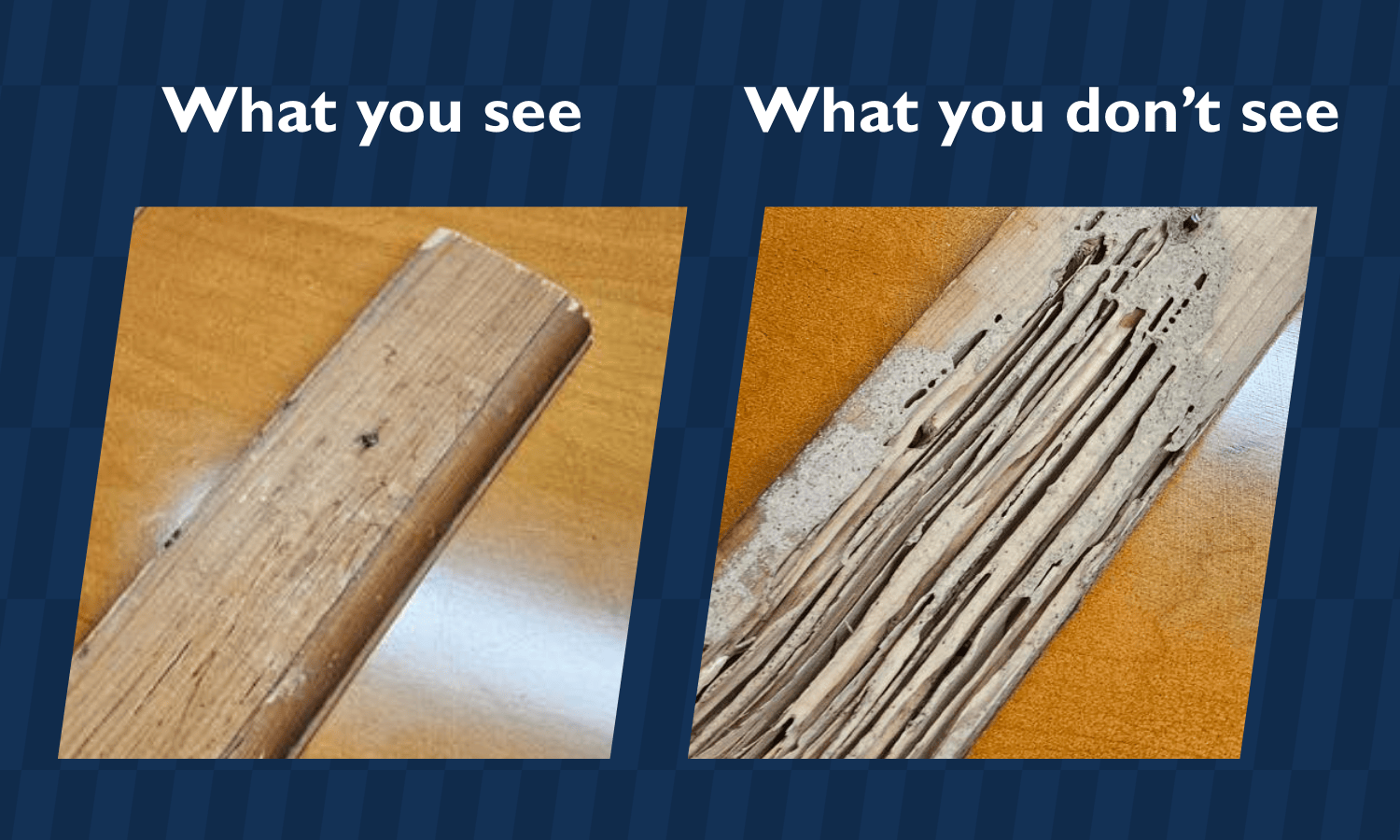
Termites thrive off of moisture, but air and sunlight dry them out; so they create tunnels of mud to protect themselves. It’s common to find these mud tubes or termite damage behind drywall. Since drywall creates a visual barrier between living spaces and structural wood, paint and trim can appear intact even while termites feed on framing behind the surface. When renovations begin, drywall is removed, wall cavities are opened, and framing becomes visible. That’s when mud tubes or termite damage are hidden by the drywall, which is how termites in walls are so often discovered during remodeling projects.
Older homes face a higher likelihood of concealed termite activity due to aging infrastructure. Over time, pressure-treated wood loses its protective properties, roofs develop leaks, foundations settle and crack, and landscaping matures to create cover for termite tunnels. These hidden moisture problems and structural gaps provide ideal entry points and conditions for infestation. However, newer properties are not immune. Termites seek wood and moisture. If those conditions exist behind walls, activity can develop regardless of a home’s age.
Termites in Walls and Drywall Can Stay Hidden for Years
Termites in drywall areas are not feeding on the drywall itself. They target wood studs and framing hidden behind finished surfaces. Drywall helps maintain stable temperature and humidity levels, which supports termite activity.
Once termites access wood, they follow the grain to build networks of tunnels throughout the structure. Subterranean termites create these pathways to connect the colony, allowing infestation to spread both vertically and horizontally behind walls. Their presence often goes unnoticed because exterior signs may be minimal or absent. This allows termite damage inside walls to progress without drawing attention.
Early Signs of Termites in Drywall Homeowners Often Miss
Early signs of termites in drywall are subtle and frequently mistaken for cosmetic issues or normal settling. These indicators may appear long before walls are opened during renovation.
Homeowners may notice:
- Small pinholes or bubbling beneath paint
- Drywall that sounds hollow when lightly tapped
- Slight warping near baseboards or trim
- Discoloration along seams or corners
- Discoloration or yellowing of paint from high moisture
These signs alone do not confirm termite activity, but they can point to hidden termite damage that deserves professional evaluation. Renovations often bring these clues into sharper focus once finished surfaces are removed.
Hidden Termite Damage and the Risk to Structural Wood
Hidden termite damage presents a serious concern because it affects structural components rather than surface materials. By the time termites are visible, framing may already be compromised.
Termite damage inside walls commonly impacts studs, headers, sill plates, and load-bearing wood. During renovations, contractors may find wood that breaks easily, shows interior tunneling, or lacks strength. These findings often indicate long-term termite activity rather than a recent issue.
Because this damage is concealed, homeowners rarely recognize the problem until construction exposes it. Structural repairs can become more extensive once the full scope of damage is revealed.
Professional termite inspections help assess the condition of structural wood and identify activity patterns. This information supports informed decisions before renovation work continues.
Contact Us Today
If you have questions about our services, plans, or pricing, we are here for you. Call or fill out the form to communicate by email.
Termite Damage in Basement Areas During Renovation Projects
Basements and crawlspaces are among the most vulnerable areas for termite infestations due to their proximity to soil and consistently high moisture levels. Crawl spaces rarely receive homeowner inspections, allowing termite activity to go unnoticed for years. Basements may appear problem-free on the surface, but finished walls, stored items, and insulation conceal damage until renovation work exposes the underlying structure.
Both spaces provide direct foundation contact that termites exploit to access wood framing. Whether the foundation is constructed with block walls, solid-pour concrete, stone, or rock, termites find entry points through settlement cracks, gaps, and seams. Moisture from plumbing lines, condensation, poor drainage, and foundation seepage creates ideal conditions for subterranean termites to thrive.
Termite damage in basements commonly appears in support beams, floor joists, sill plates, wall studs, and even rafters behind insulation. Homeowners who stack cardboard boxes, chopped wood, or wooden furniture directly against basement walls often discover damage during cleanouts or remodeling. Attached garages present similar risks, as they share foundation contact and often store wood-based materials.
Renovation projects that frequently uncover termite activity include finishing unfinished basements, replacing insulation, repairing or updating framing, addressing foundation cracks, and installing new wall systems. In crawlspaces, infestations are typically found during HVAC work, vapor barrier installation, or structural inspections. Once walls are opened, insulation is removed, or floor systems are accessed, the full extent of termite damage becomes visible.
Addressing termite damage in the basement and crawlspace areas requires professional assessment. Pest control experts evaluate current activity, identify moisture sources and entry points, and develop treatment plans focused on elimination and long-term property protection.
How Professional Inspections Address Termites Found During Renovations
Professional termite inspections focus on identifying activity, damage, and environmental conditions that support infestations. When termites are discovered during renovations, inspections help guide next steps without speculation.
| Renovation Scenario | Inspection Focus | Why It Matters |
| Walls opened during remodeling | Exposed studs and framing | Confirms if there’s any termite damage inside the walls |
| Basement renovation | Framing, moisture control, and foundation contact | Identifies termite damage in basement areas |
| Older home updates | Assessment for older wood structures that may have been at risk | Finds hidden termite damage |
| Pre-renovation planning | Risk area evaluation and peace-of-mind inspection | Identify risk areas and plan for termite prevention |
| Repairs from water leak/damage | Damaged drywall, framing, and/or insulation | Identify/eliminate any potential attractants to termites |
Professional inspections rely on training and experience rather than surface appearance. Pest professionals assess moisture sources, wood condition, and construction features that influence termite activity.
Including a termite inspection during renovation planning helps limit surprises and supports responsible project management.
American Pest has been serving homeowners and businesses across Maryland, Virginia, and Washington, DC, since 1925. If your renovation uncovers concerns about termites in walls or drywall, contact the American Pest team today to get a free phone estimate.
Related Posts
Contact Us Today!
Do you need an estimate for service or have questions about pests? We’d love to hear from you!
Fill out the form and receive feedback today. For immediate service, please give us a call!