Why Ants Keep Coming Back After You Clean
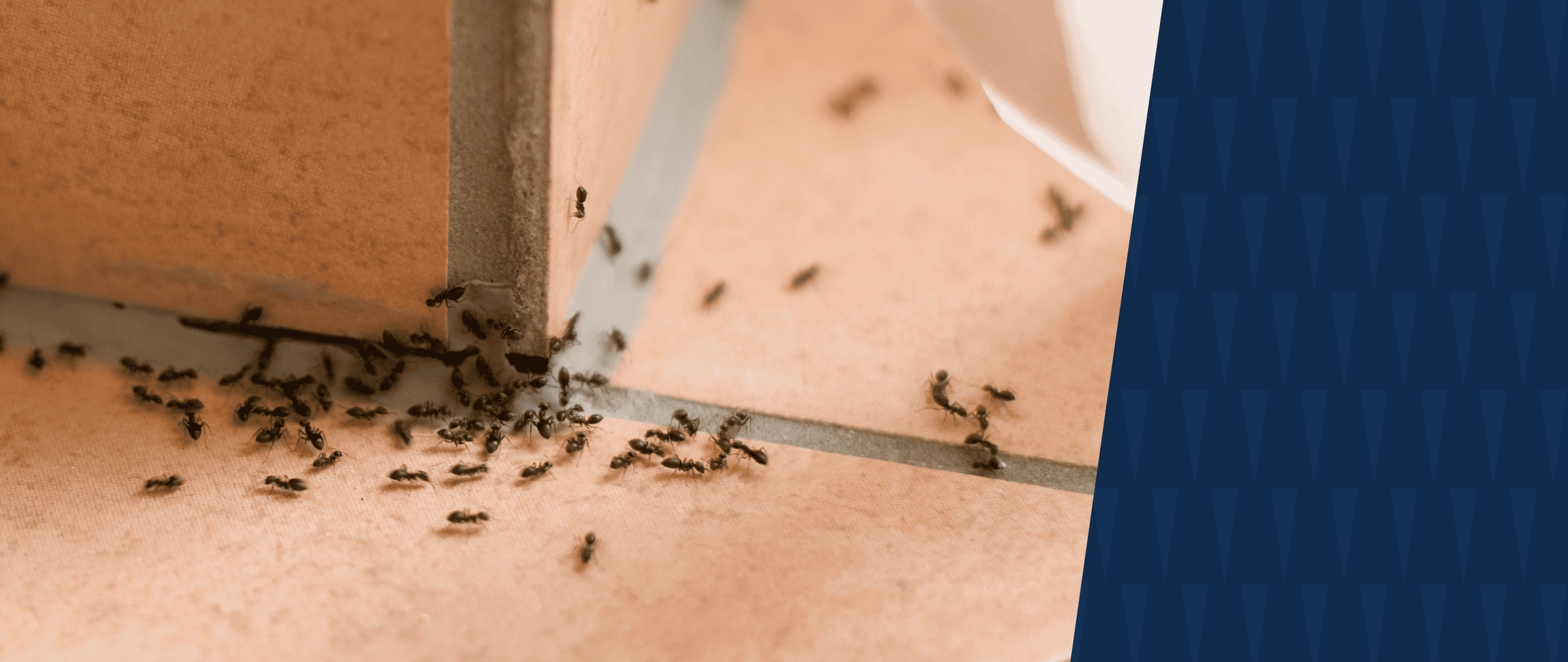
Table of Contents
The Big Takeaways
- Cleaning your home does not stop ant infestations because the problem lies with the colony, often outside.
- Ants are attracted by moisture, food odors, and structural entry points, not just dirt.
- Environmental factors like rain and drought can drive ants indoors, regardless of home cleanliness.
- Store-bought treatments fail to address the colony, leading to ongoing infestations.
- Professional ant control targets the nest and utilizes proper identification, stopping any return cycle.
You wiped down the counters. You swept up every crumb. You checked the pantry, tossed the open cereal box, and made sure nothing was left out overnight. And yet, the next morning, there they are again: a fresh line of ants marching across the same spot as before.
If this sounds familiar, you are not alone, and more importantly, you are not doing anything wrong. A clean house is a good thing, but it is not the same thing as an ant-free house. Most recurring ant infestations in homes have very little to do with sanitation. They have everything to do with where ants are nesting and why they keep coming inside.
Why a Clean House Does Not Solve an Ant Problem
The most common misconception about ants is that they show up because something is dirty. It is an understandable assumption, but it misses how ants actually behave.
Ants are foragers. Their job is to scout territory, find resources, and bring them back to the colony. That colony might be living in the soil along your foundation, tucked under a patio slab, settled into a mulch bed, or nesting inside a wall void — none of which have anything to do with how clean your kitchen is. Cleaning removes attractants from the interior, but it does nothing to address the colony itself. As long as that colony is active and nearby, foragers will keep coming inside. Understanding why ants keep coming back starts with understanding that the real problem is almost always outside the room you just cleaned.
What Actually Draws Ants Inside
Ants are opportunistic, which means they respond to a wide range of triggers. Moisture is one of the biggest draws: a slow drip under a sink, condensation around pipes, or a damp basement can pull ants in, even when there is no food in sight. Food odors from packaging that is sealed but not airtight are another factor, since ants can detect trace scents through cardboard and thin plastic that humans cannot.
Different ant species are also drawn inside for different reasons, which is why identifying what you are dealing with matters. Odorous house ants are drawn to moisture and sweets. Carpenter ants often follow damaged or wet wood. Pavement ants tend to forage broadly for anything available. Structural entry points, including gaps around pipes, cracks in the foundation, and spaces along door frames, give all of them a way in regardless of what is waiting on the other side.
Contact Us Today
If you have questions about our services, plans, or pricing, we are here for you. Call or fill out the form to communicate by email.
Ants in Home After Rain and Other Seasonal Triggers
One of the most reliable patterns homeowners notice is that ants in the home seem to appear out of nowhere right after it rains. There is a straightforward explanation: When soil becomes saturated, colonies move to avoid flooding, and the closest dry structure, often the house, becomes a refuge. It is not that rain makes ants more attracted to your home, but that it makes staying outside more difficult.
Extreme heat and drought push ants indoors for similar reasons. When the ground dries out and food becomes harder to find outside, ants range further in search of moisture and resources. These are environmental responses, not signs of a dirty home, and they are part of why ants keep coming back in cycles that seem to align with the weather.
Signs of an Ant Infestation Beyond the Ants Themselves
Seeing ants on the counter is obvious. Some signs of an ant infestation are easier to miss:
- Ant trails along baseboards, window sills, or behind appliances
- Small piles of soil or debris near baseboards or entry points, which can indicate nesting activity nearby
- Faint rustling sounds inside walls, particularly with larger species like carpenter ants
- Winged ants indoors, which often signal a mature colony nesting within the structure itself
- Repeated activity in the same spot despite cleaning or over-the-counter treatment
That last point is worth paying attention to. If ants keep returning to the same location, something is drawing them there consistently, and surface-level treatment is not reaching it.
Why Over-the-Counter Treatments Keep Failing
Store-bought sprays and baits are designed to kill what you can see. The forager ants on your counter represent a fraction of a colony that may number in the thousands. Killing foragers does not affect the colony, and with some species, it can backfire. Certain ants, like odorous house ants, respond to disruption by budding: splitting off into multiple satellite colonies. One problem can quietly become several.
Most over-the-counter attempts fall short for a few consistent reasons:
- Sprays repel foragers but leave the colony intact: Ants reroute around treated areas and re-enter through a different gap. The colony never notices.
- Incorrect bait for the species: Baits are formulated for different diets: sugar-based, protein-based, and oil-based. If it does not match what the species is actively foraging for, they will ignore it.
- Skipping the entry point: This one matters more than most people realize. Ants navigate by pheromone trails, chemical pathways that guide foragers from the colony to a food source. Cleaning can disrupt those trails indoors, but if treatment does not extend to where ants are actually entering, they cross the threshold, lose the trail, and begin foraging in new directions. Bait placed in the middle of the kitchen, nowhere near the entry point, misses the moment when it would actually intercept the problem.
- Treating inside while the colony stays outside: If the nest is in a mulch bed or along the foundation, any interior-only treatment is incomplete by definition.
| Species | Primary Draw | Likely Nesting Location |
| Odorous House Ant | Moisture, sweets | Soil near foundation, wall voids |
| Pavement Ant | Broad forager: food and moisture | Under slabs, along foundations |
| Carpenter Ant | Damp or damaged wood | Wall voids, structural wood |
| Little Black Ant | Sweets, grease | Soil, wall voids, woodwork |
| Acrobat Ant | Moisture, existing galleries | Damp wood, prior insect tunnels |
Knowing how to stop ants from coming back means addressing the source, not just the trail. Without locating and treating the nest directly, the cycle continues.
What Professional Ant Control Actually Does Differently
Professional ant control starts before any product is applied. A pest professional begins with inspection and identification; finding where ants are entering, identifying the species, and determining whether the colony is inside or outside the structure. Treatment is then targeted to the nest, not just the visible trail.
If you are dealing with an ant infestation that keeps returning, contact American Pest to schedule an inspection. Finding the source is the only way to stop the cycle for good.
Related Posts
Contact Us Today!
Do you need an estimate for service or have questions about pests? We’d love to hear from you!
Fill out the form and receive feedback today. For immediate service, please give us a call!