Why Summer Is When Termite Damage Gets Discovered, Not When It Starts
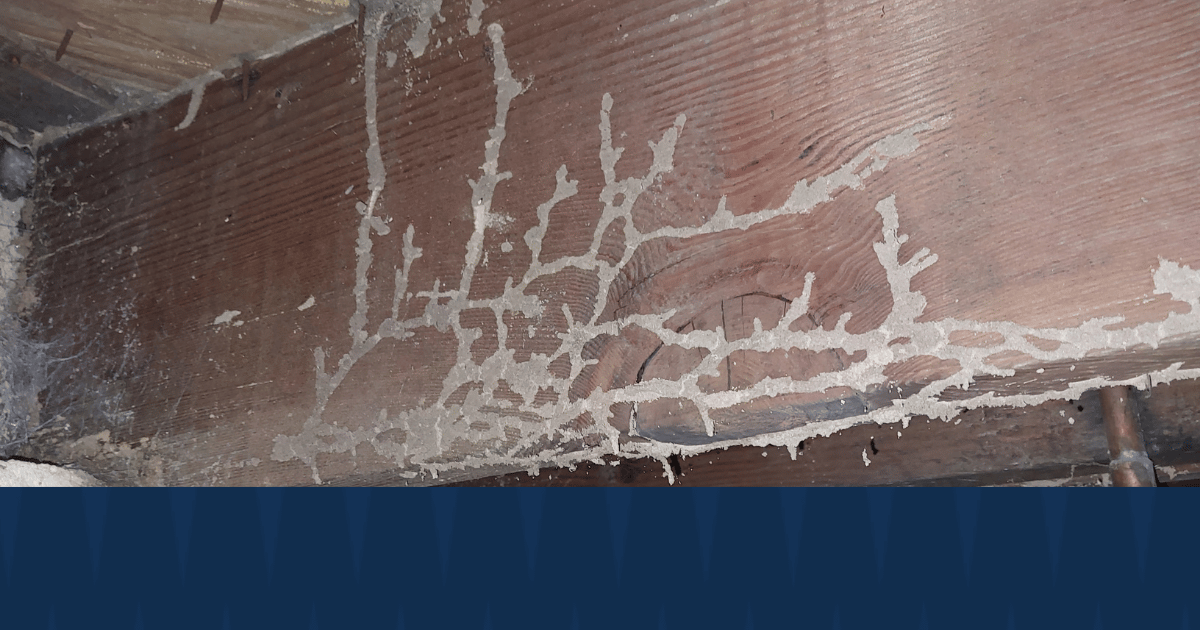
Table of Contents
The Big Takeaways
- Summer is when termite damage surfaces, not when it starts. Renovation projects, home sales, and time spent at home trigger discovery, but the feeding behind that damage began months or years earlier.
- Subterranean termites feed from the inside out, leaving wood that looks intact on the surface while galleries run through the interior. The signs that something is wrong are easy to miss or misattribute to water damage.
- Finding termite damage means addressing the active infestation before any structural repair begins. Repairing wood without treating the colony first means feeding continues in areas that were just fixed.
Termites Don’t Start in Summer. They Are Found in Summer.
A rotted floor joist uncovered during a bathroom remodel. Soft wood discovered when pulling up carpet to refinish floors. Mud tubes noticed for the first time when a home inspector walks the crawl space before closing. These are the moments most homeowners first learn they have a termite problem. What they almost never realize is that the feeding producing that damage started long before anyone noticed it.
According to the University of Missouri, it typically takes several months to years of feeding for termite damage to become significant enough to detect. Subterranean termites avoid exposure intentionally, feeding inside wood and traveling through soil and mud tubes to stay hidden from view. The colony can operate undisturbed inside a structure for years before any surface sign appears.
Summer creates more opportunities for discovery. Renovation projects open walls and floors that stay closed the rest of the year. Real estate activity sends inspectors into crawl spaces and attics. Late March through May can bring termite swarmers to the surface, which alerts homeowners to activity they didn’t know was present. None of that means the problem is new. It means conditions finally allowed it to be seen.
Contact Us Today
If you have questions about our services, plans, or pricing, we are here for you. Call or fill out the form to communicate by email.
What Hidden Termite Damage Looks Like
Subterranean termites feed along the grain of wood, targeting the softer springwood and leaving the harder layers behind. The result is wood that looks structurally intact on the surface while hollow galleries run through the interior. According to UC IPM, these cryptic and secretive feeding habits mean that signs of subterranean termite activity often occur in dark locations behind walls, in crawl spaces, or beneath slab foundations, making discovery difficult without professional inspection.
What makes hidden termite damage so easy to miss is how closely some signs resemble other household problems. A few of the most commonly overlooked indicators:
- Wood that sounds hollow when tapped but shows no visible surface damage
- Paint or drywall that bubbles, blisters, or warps without a clear moisture source nearby
- Floors that feel soft or springy underfoot, particularly near exterior walls or bathrooms
- Baseboards or door frames that crumble or give way under light pressure
- Mud tubes along foundation walls or crawl space piers, sometimes dry and inactive-looking but still significant
- Doors or windows that have become difficult to open without any obvious structural explanation
- Discarded swarmer wings collected near windowsills or interior light fixtures
Understanding what termites look like in their various forms, workers, swarmers, and the damage signatures they leave behind, helps homeowners connect the dots between what they are seeing and what might be causing it.
Early Signs of Termite Infestation to Check for Right Now
Knowing what to look for is different from knowing how to interpret it. Two of the most common early signs of termite infestation, bubbling paint and soft or discolored wood, are also symptoms of water damage. Homeowners who misidentify one for the other often address the wrong problem and leave feeding activity undisturbed.
| Sign | Likely Termite Damage | Likely Water Damage |
| Paint bubbling or blistering | Occurs without nearby plumbing or roof leak; wood beneath feels hollow | Tied to a known leak source; wood is often visibly wet or discolored |
| Soft or spongy wood | Dry on the surface but hollow or crumbling inside; possible mud tubes nearby | Wood is damp or visibly rotted; often darkened from moisture |
| Floor feels soft underfoot | No moisture source identified; affects interior areas away from plumbing | Near bathroom, kitchen, or exterior wall with known moisture history |
| Warped or tight door/window frames | No rain or humidity event that explains the change | Frames swell predictably after wet weather or seasonal humidity shifts |
| Discoloration on walls or ceilings | No stain pattern consistent with water travel; may appear in dry areas | Follows gravity; typically traces back to a source above the stain |
For a comprehensive look at early warning signs of termites across different areas of the home, a full checklist helps homeowners know what they are looking at before calling for an inspection.
Where in the Home Termites Are Most Likely to Be Feeding Unseen
Termites don’t feed randomly. They follow moisture gradients and wood-to-soil contact points, which means certain areas of the home carry consistently higher risk for undetected activity. The locations where hidden termite damage accumulates most often:
- Crawl space rim joists and floor joists, particularly where wood sits close to the soil line
- Subflooring beneath bathrooms and kitchens, where plumbing leaks create the moisture conditions termites prefer
- Wall voids adjacent to foundation penetrations for plumbing, conduit, or utility lines
- Basement sill plates where wood contacts concrete and moisture transfers between materials
- Garage framing that sits on or near grade, often overlooked during casual inspection
- Attic framing in older homes, where moisture from poor ventilation has conditioned wood over time
Moisture inside a structure is one of the most consistent predictors of where termite feeding concentrates. Any area with a history of leaks, condensation, or poor drainage is worth prioritizing when inspecting for activity.
Termite Damage Repair: What Comes After Discovery
Finding termite damage triggers an understandable impulse to fix it immediately. The structural problem is visible, it’s concerning, and the instinct is to repair it. The sequence that actually produces a lasting result goes in a different order.
Before any structural repair can happen, the active infestation has to be addressed. Termite damage repair that happens before treatment means feeding continues in the repaired areas. New wood introduced into an untreated structure becomes a fresh food source. The repair adds cost without solving the problem.
The correct sequence after discovery is inspection first to confirm active feeding and identify the scope of the infestation, treatment to address the colony, verification that feeding has stopped, and then structural assessment and repair. The extent of repair needed is almost always tied directly to how long the infestation went undetected. An infestation caught early may require minimal repair. One that operated undisturbed for years in a crawl space may have compromised structural framing that requires significant repair.
Homeowners who discover termite damage during a renovation are in a position where sequencing matters more than usual, because the repair scope is already open and the temptation to address everything at once is strong. Treating the active infestation before the renovation closes the walls back up is the practical approach.
Why a Professional Termite Inspection Is the Only Way to Know for Certain
A thorough homeowner walkthrough of a crawl space or basement can surface obvious signs of termite activity. What it cannot do is confirm the absence of activity, establish where feeding is currently concentrated, or assess damage in areas that require specialized tools and access to evaluate.
Professional termite inspections use probing tools to test wood integrity, reach areas that aren’t accessible without specialized equipment, and, if termites are found, document findings in a way that creates a baseline record for future comparisons. That documentation history matters: without a prior inspection on file, there is no reliable way to determine when damage observed during a later inspection actually began or how quickly it progressed.
Regular professional inspections are how homeowners can get ahead of the timeline that makes termite damage so costly. Discovery during a remodel or a sale is reactive. Inspection on a consistent schedule is the proactive alternative that gives homeowners the information they need before damage accumulates to the point where repair becomes unavoidable.
Professional termite treatment and inspection services from American Pest give homeowners a documented baseline and an ongoing protection strategy. To schedule an inspection before the problem progresses further, contact our team today.
Related Posts
Contact Us Today!
Do you need an estimate for service or have questions about pests? We’d love to hear from you!
Fill out the form and receive feedback today. For immediate service, please give us a call!