Why Ant Colonies Are So Hard to Fully Address After One Treatment
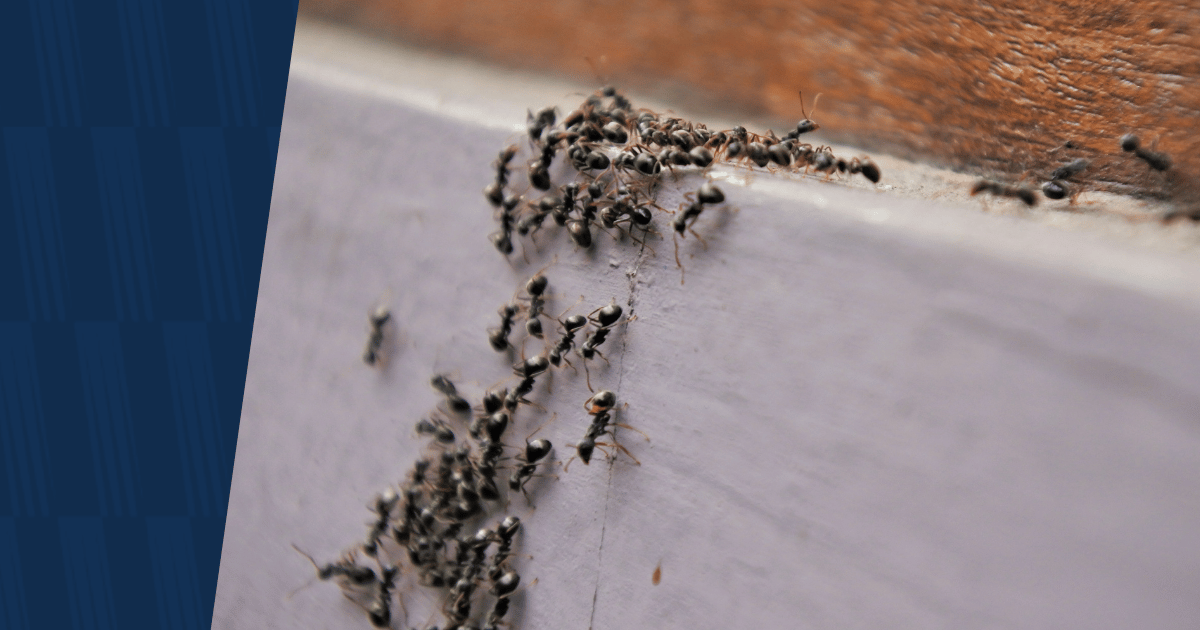
Table of Contents
The Big Takeaways:
- Forager ants are the oldest and most replaceable members of the colony. Treating them alone leaves queens and younger workers untouched, which is why activity returns weeks after a surface treatment.
- Odorous house ants can have thousands of queens across multiple nests. Carpenter ants can maintain up to twenty satellite nests. One treatment rarely reaches enough of the colony to hold.
- Ants swarming bait stations means the treatment is working. Leave stations alone and give the bait time to transfer through the colony.
A single ant treatment can produce real results and still leave the underlying problem intact. Homeowners who see activity slow down after treatment, then watch it return weeks later, aren’t imagining things. The colony itself often survives, sometimes barely affected. Understanding why requires looking at how ant colonies are actually structured, and why that structure makes a single treatment rarely sufficient on its own.
How Ant Colony Structures Work
Most people picture an ant colony as one nest with one queen. For a handful of species, that’s roughly accurate. For the ants most likely to show up inside a Maryland or Virginia home, it isn’t.
Ant colony structure varies significantly by species, and that variation determines how a colony responds to treatment. Two species account for the majority of residential complaints in this region: odorous house ants and carpenter ants. They behave very differently from each other, and both behave differently from what most homeowners expect.
| Factors | Odorous House Ants | Carpenter Ants |
| Queens per colony | Thousands, distributed across multiple nests | One queen per colony |
| Nest structure | Multiple interconnected nests forming supercolonies | Parent nest plus up to 20 satellite nests |
| Where you find them | Throughout the structure, trailing along walls and baseboards | Satellite nests inside; parent nest typically outdoors in wood or trees |
| Colony response to disturbance | Can split and relocate, creating new nests | Satellite nests repopulate as long as parent nest survives |
| What controls them | Non-repellent bait that spreads through the population | Parent nest must be located and treated directly |
Odorous house ants are polygyne, meaning a single colony contains multiple queens, sometimes thousands of them distributed across multiple interconnected nests. In urban environments, research published in Scientific Reports found that odorous house ant colonies form large supercolonies with millions of workers and thousands of queens spread across multiple nesting sites. Treating one nest, or targeting the foragers you can see, doesn’t reach the queens producing the next generation.
Carpenter ants operate differently. Each colony has one queen, but that colony typically extends well beyond a single nest. According to the Illinois Department of Public Health, a carpenter ant colony is often composed of a parent nest located outdoors, joined by satellite nests that can number up to twenty connected sites. The queen and all reproductive activity stay in the parent nest. The satellite nests, which are what homeowners most often find inside their structures, cannot reproduce on their own. But as long as the parent nest survives, they repopulate.
Forager Ants Are the Oldest Workers in the Colony
The ants homeowners see trailing across countertops and along baseboards are almost never representative of the colony as a whole. Forager ants are the oldest adult workers in the colony. Younger ants stay closer to the nest, nursing brood and tending queens. A treatment that targets foragers directly addresses the oldest, most expendable segment of the population, while the younger generation continues developing undisturbed.
This is one of the most common reasons ants keep coming back after a treatment that seemed to work initially. The foragers slow or stop, but the colony keeps producing. Within weeks, a new cohort of workers matures and resumes foraging, often along the same routes.
How Long Does Ant Bait Take to Work?
Bait treatments work on a fundamentally different principle than contact sprays. Rather than targeting the ants you can see, bait relies on foragers carrying active ingredients back to the colony, where these ingredients spread through feeding and grooming behavior to workers, brood, and queens.
That process takes time. How long ant bait takes to work depends on the species, colony size, and the type of bait used, but results are rarely immediate. For odorous house ants with thousands of queens distributed across multiple nests, bait needs to reach a significant portion of the reproductive population before colony numbers begin to decline meaningfully. That doesn’t happen in a day or two.
One of the most counterproductive things a homeowner can do during a bait treatment is disturb or remove the bait stations when ants are visibly surrounding them. Ants clustering around bait is the treatment working. Those foragers are consuming the bait and will carry it back to the nest. Interfering with that process, whether by spraying the area, cleaning around the bait, or moving the stations, breaks the transfer chain and forces the treatment to start over.
If you’re unsure what you’re dealing with, the answers to common ant questions can help clarify what species you likely have and what to expect from treatment before a professional visits.
Contact Us Today
If you have questions about our services, plans, or pricing, we are here for you. Call or fill out the form to communicate by email.
How to Fully Get Rid of Ants: What That Actually Requires
Getting rid of ants fully means addressing the colony, not just the foragers visible at the surface. For most homeowners dealing with odorous house ants or carpenter ants, this requires working through several factors that a single visit rarely covers completely.
Recognizing the signs of an ant infestation accurately is the starting point. From there, full resolution typically depends on:
- Correctly identifying the species, since the treatment approach for carpenter ants differs significantly from what works for polygyne species like odorous house ants
- Locating the nesting sites, including satellite nests inside the structure and the parent nest or primary colony outside
- Selecting products that work with the colony’s biology rather than triggering it to split and relocate
- Addressing conducive conditions, including moisture issues, wood in contact with soil, dense vegetation against the foundation, and accessible food sources inside the structure
- Following through across multiple visits, since colony populations don’t decline in a single treatment cycle
Conditions that support the infestation need as much attention as the ants themselves. Treating the population without removing what drew them there produces short-term results at best. If you’ve already tried addressing the problem and can’t identify why you can’t get rid of ants despite repeated attempts, colony structure is usually the reason.
Professional Ant Treatment: Why Follow-Up Matters
A professional ant treatment is most effective as a recurring service, not a one-time resolution, not a one-time resolution. The biology of ant colonies, particularly polygyne species like odorous house ants, means that meaningful population reduction takes time and requires more than one visit.
What professional ant control provides that DIY approaches rarely do is species-level identification, targeted product selection, and a treatment plan built around how that specific colony is structured. A pest professional can distinguish between a satellite nest inside the home and a parent nest, identify the likely outdoor source, and apply treatments in the right locations at the right intervals to work with the biology rather than against it.
For homeowners dealing with recurring ant activity, the problem usually comes down to one of three things: the wrong product for the species present, treatment that addressed foragers without reaching reproductive members of the colony, or conducive conditions that kept the population rebuilding between visits. A home pest control plan that covers ants year-round addresses all three by keeping treatment consistent across the seasons when colonies are most active.
American Pest serves homeowners across DC, Maryland, and Virginia with ant control programs designed around the species present and the structure of the infestation. To schedule an inspection, contact our team before the problem rebuilds again.
Related Posts
Contact Us Today!
Do you need an estimate for service or have questions about pests? We’d love to hear from you!
Fill out the form and receive feedback today. For immediate service, please give us a call!